McLaren - A name for eternity
This temporary exhibition celebrates the 30th anniversary of McLaren's victory at the 24 Hours of Le Mans with the F1 GTR. From the 1964 24 Hours of Le Mans, where Bruce McLaren shared the wheel of a Ford GT40 with Phil Hill, to the 2024 McLaren 720S GT3X, including the 1995 McLaren F1 GTR and the 2008 McLaren F1 MP4/23 Mercedes-Benz.
|
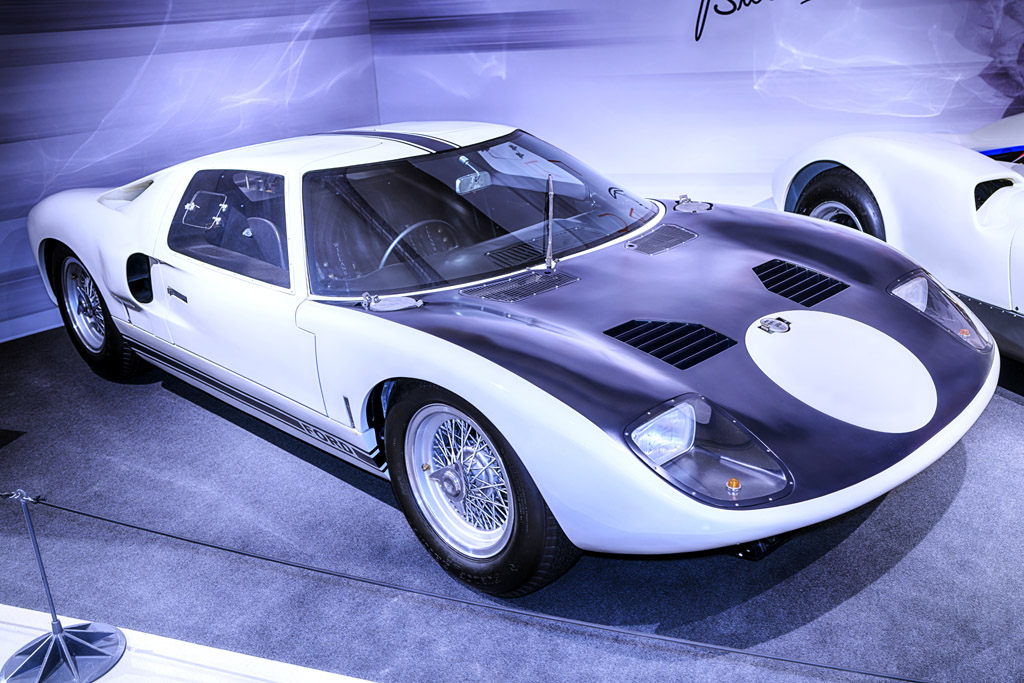
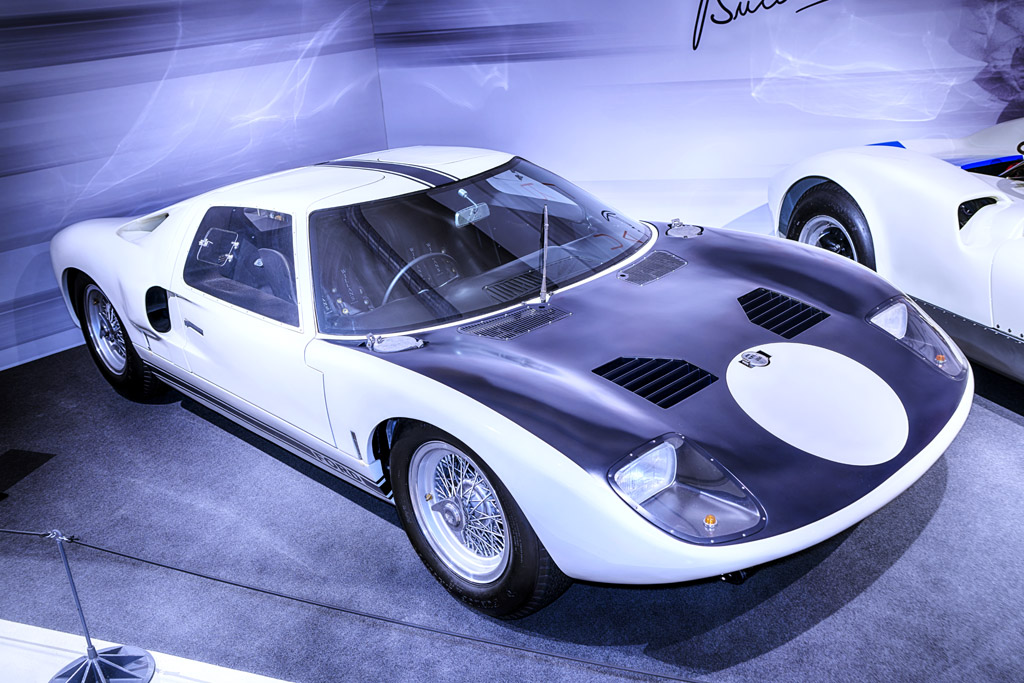
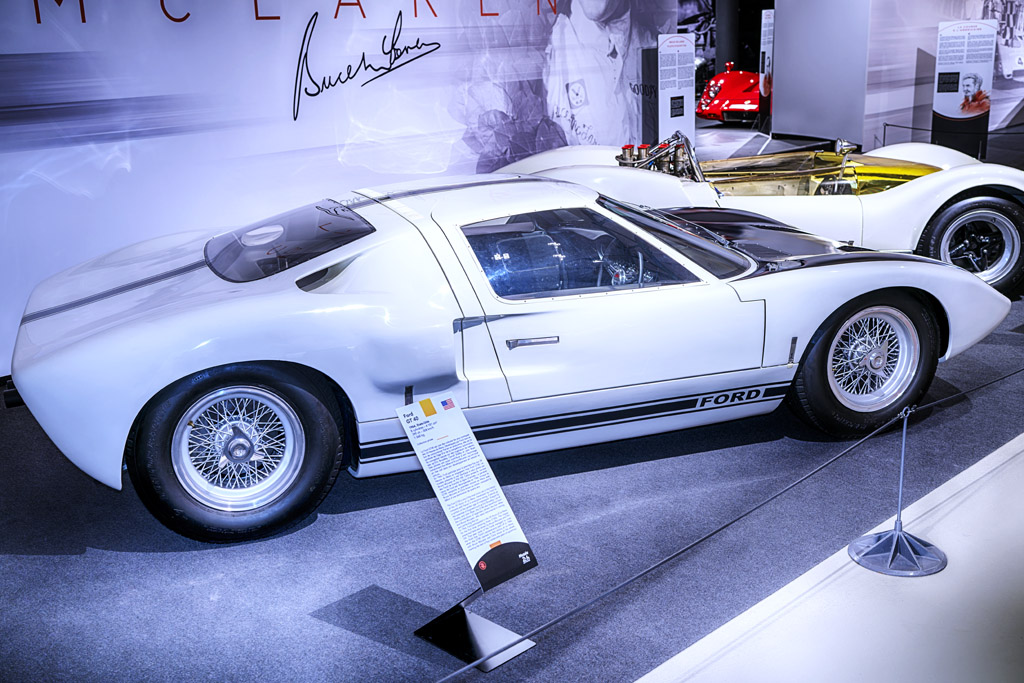
Ford GT 40 GT101R - 1964 - Reconstruction
In 1964, Ford participated in the 24 Hours of Le Mans for the first time, entering three GT 40s. The chassis presented here is the same type than the one driven by Bruce McLaren and Phil Hill. That year, none of the Fords managed to cross the finish line. Ford's perseverance paid off in 1966, when the GT 40 claimed its first victory at Le Mans, with Bruce McLaren and Chris Amon at the wheel, marking the start of four consecutive years of supremacy.
|
|
|
|
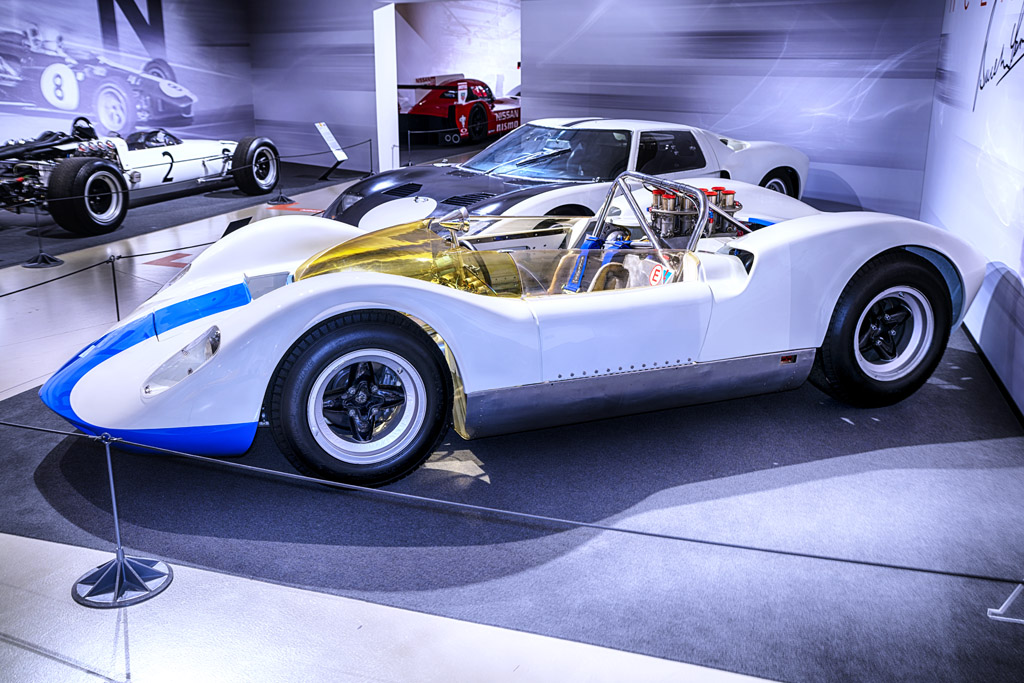
McLaren Elva Mark I Oldsmobile #20/10 - 1965
The McLaren Elva Mark I is the first sports car designed by McLaren. Developed to meet the requirements of Group 7, which governs two-seaters racing cars, it was produced in series by the small manufacturer Elva associated with Trojan Limited between 1963 and 1968. Intended for private customers, it was used in competitions in North America and Europe. The lightweight, open-top car marks the beginning of the 'barchetta' style, an iconic form of the 1970s.
The chassis presented here previously belonged to American Georges Wintersteen and the Canadian John Cordt. The latter went on to have a career in Can-Am, a championship in which he raced from 1968 to 1974, always behind the wheel of a McLaren.
|

|

|
|
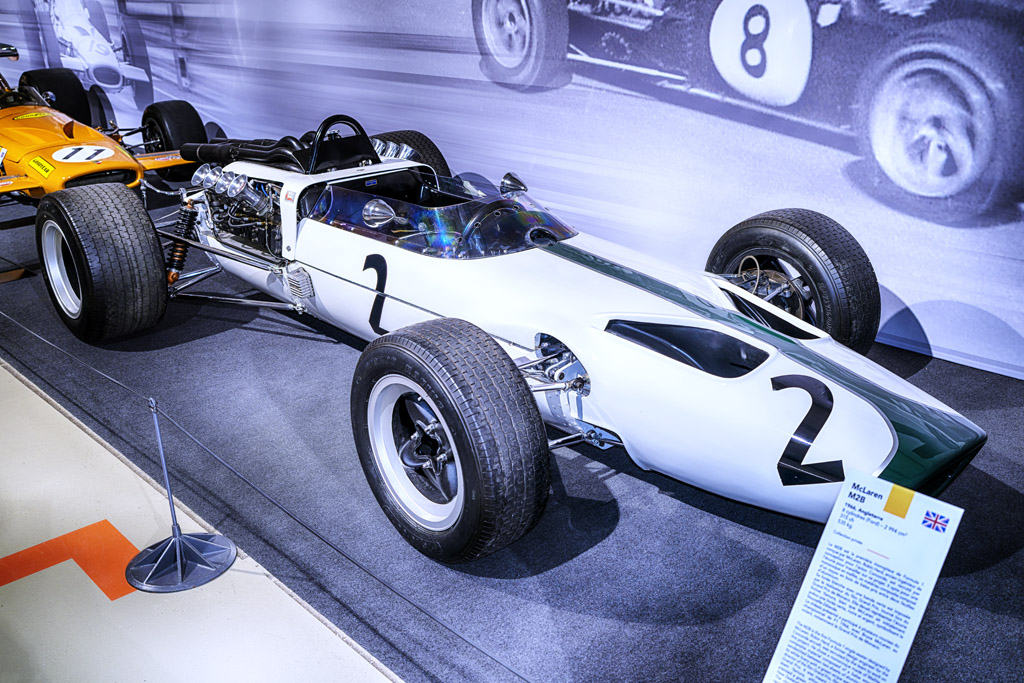
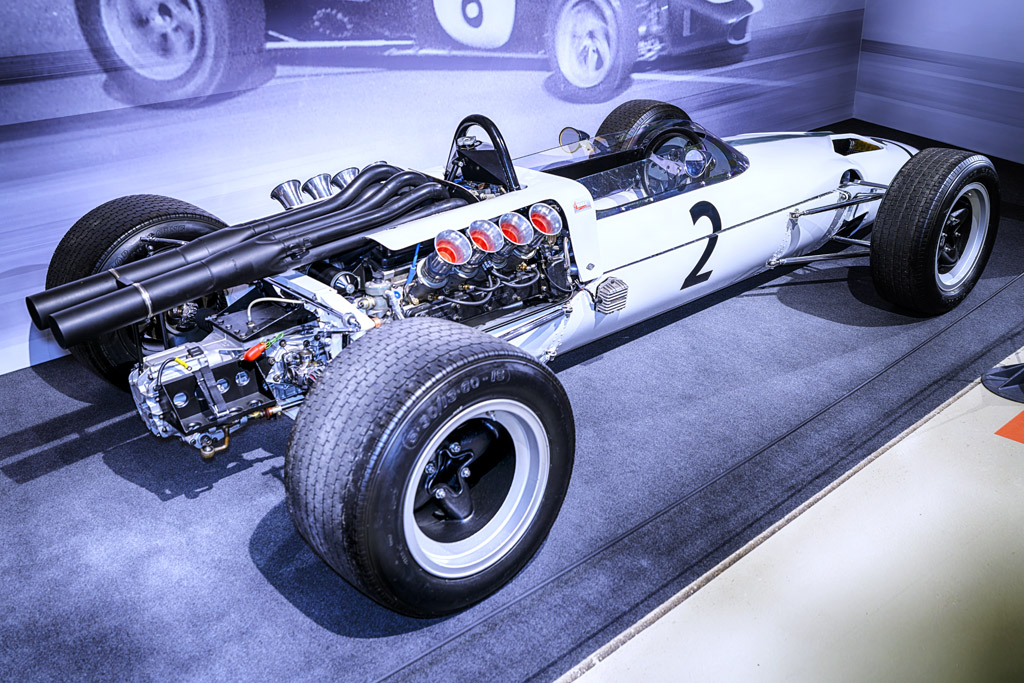
McLaren F1 M2B Ford #02 - 1966 - Bruce McLaren Motor Racing
The M2B is the first Formula 1 single-seater designed by McLaren. Robin Herd, a former design engineer for the Concorde aircraft, was recruited by the team to work on this project. He chose a monocoque made of mallite, a composite material composed of a balsa wood core sandwiched between two sheets of aluminum.
Its white livery with a green stripe was dictated by John Frankenheimer, the director of the film Grand Prix, filmed during the Monaco Grand Prix. It was meant to represent the fictional team Yamura, although McLaren had originally planned a green, black, and silver livery, symbolizing New Zealand.
The chassis presented here participated in several races of the 1966 F1 championship, with Bruce McLaren at the wheel, including the Monaco Grand Prix.
|
|
|

|
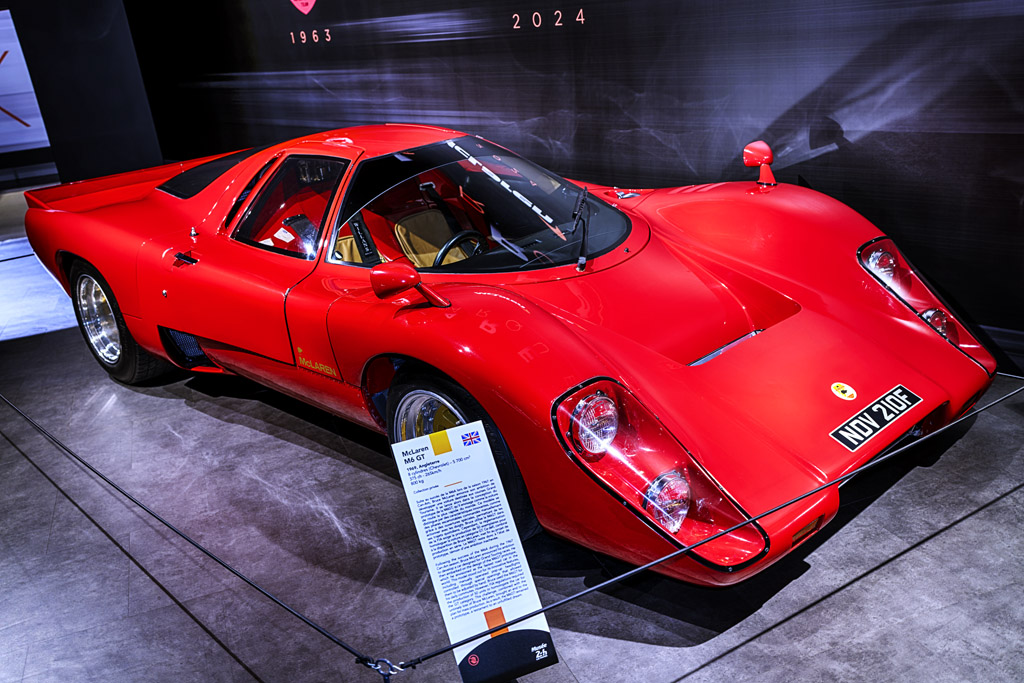
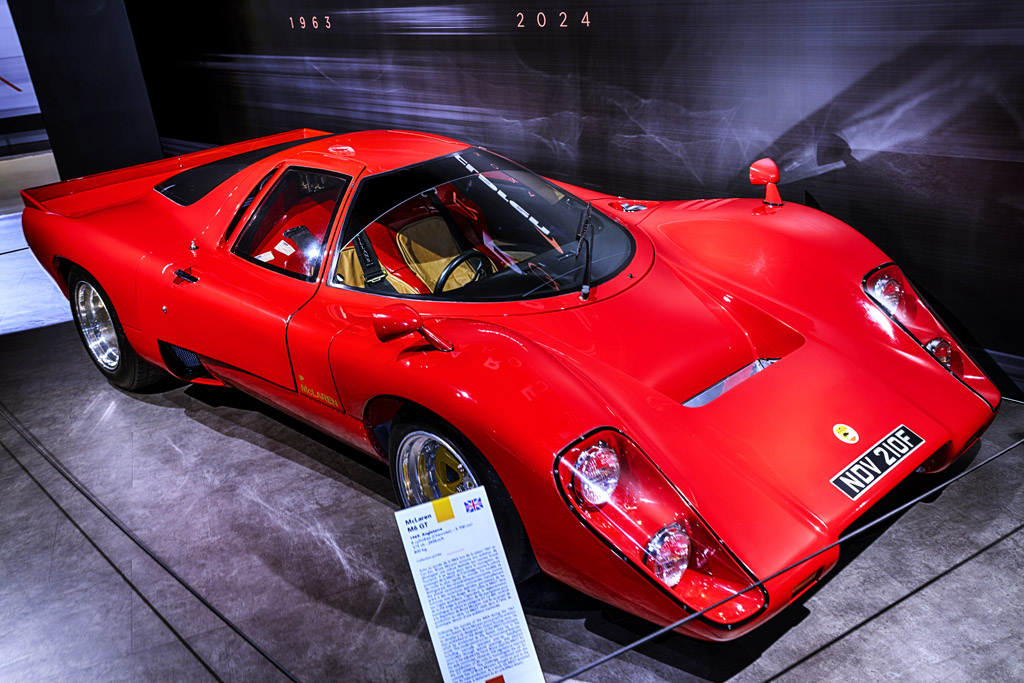
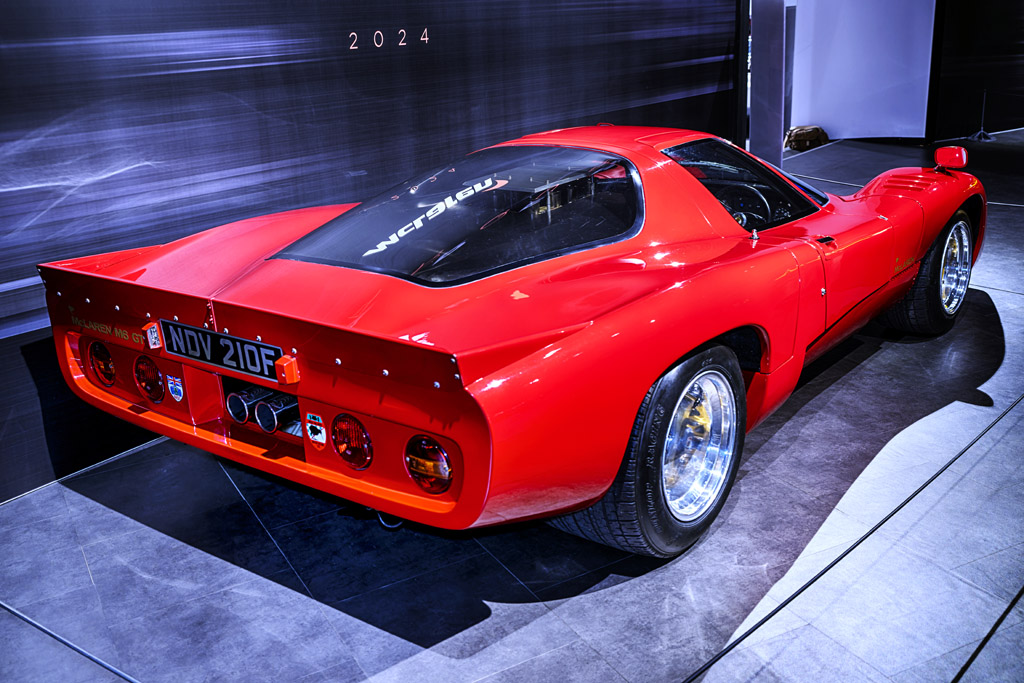
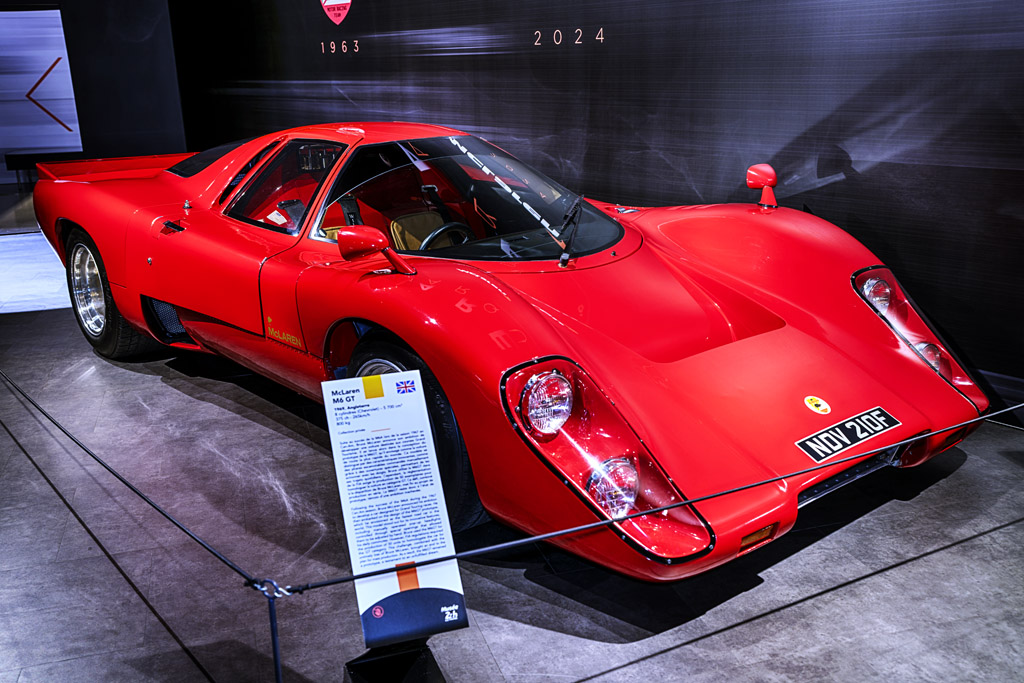
McLaren M6 GT Chevrolet Prototype - 1968
Following the success of the M6A during the 1967 Can-Am season, Bruce McLaren announced his ambition to develop a car designed for Grand Touring races. He then embarked on the design of the M6 GT prototype, which he envisioned as the fastest road car in the world. This model stood out for its innovative features, including manually operated pop-up headlights controlled through special openings that allowed them to be adjusted by hand. Bruce used the M6 GT for his daily commutes. However, FIA regulations required the production of 50 units to homologate the car for the GT category. This challenge, combined with the untimely loss of Bruce McLaren, brought an end to the plan for mass production. As a result, the M6 GT remained a prototype, a testament to an unfulfilled dream.
|
|
|
|
|
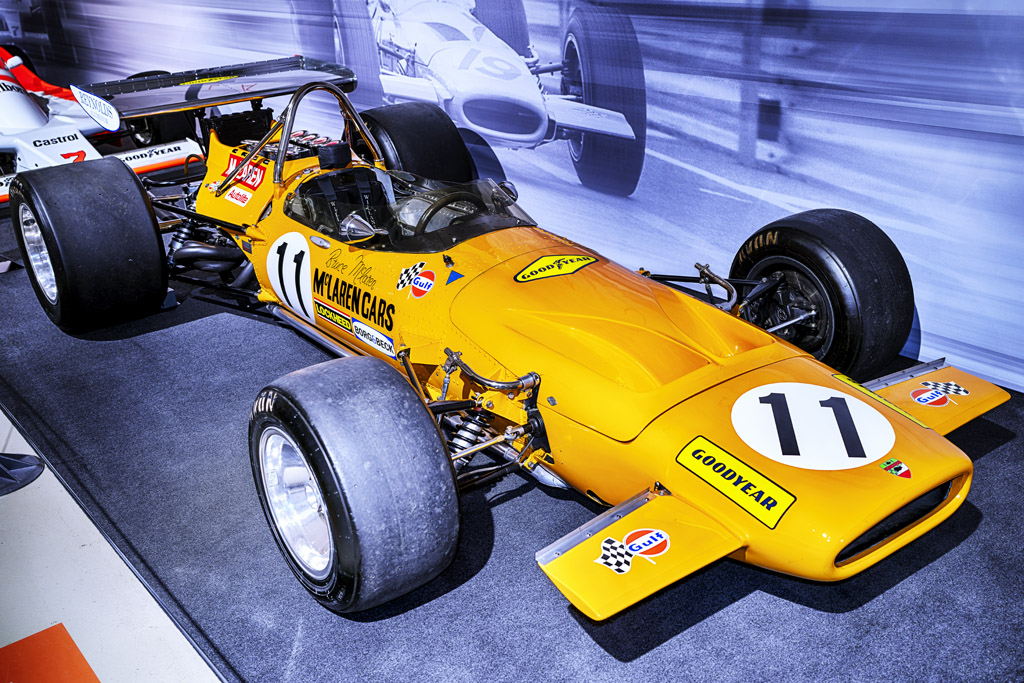
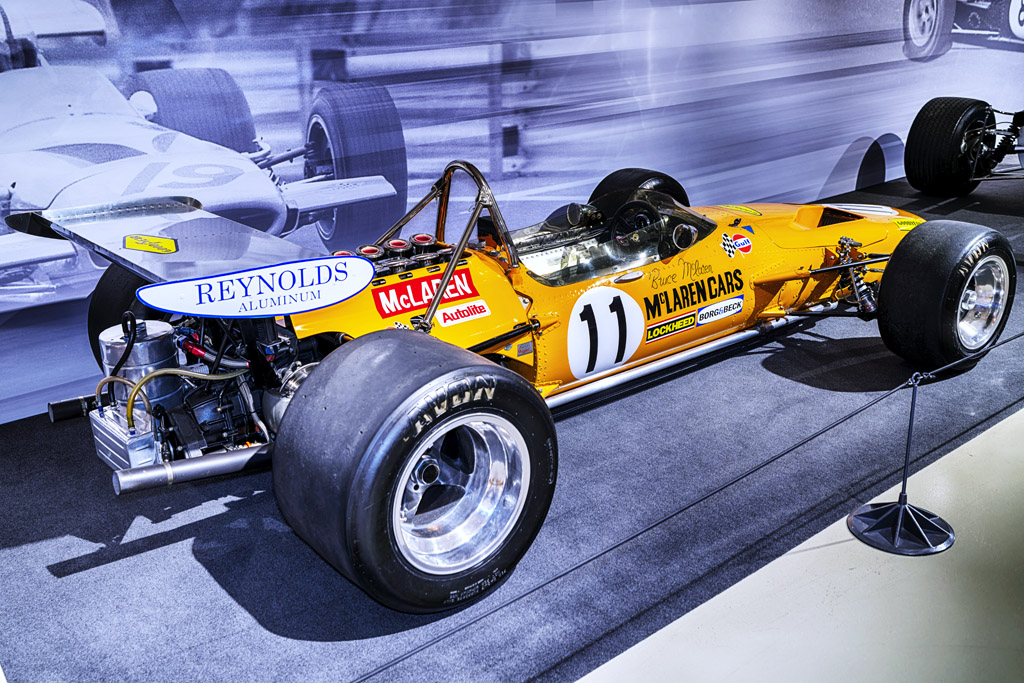
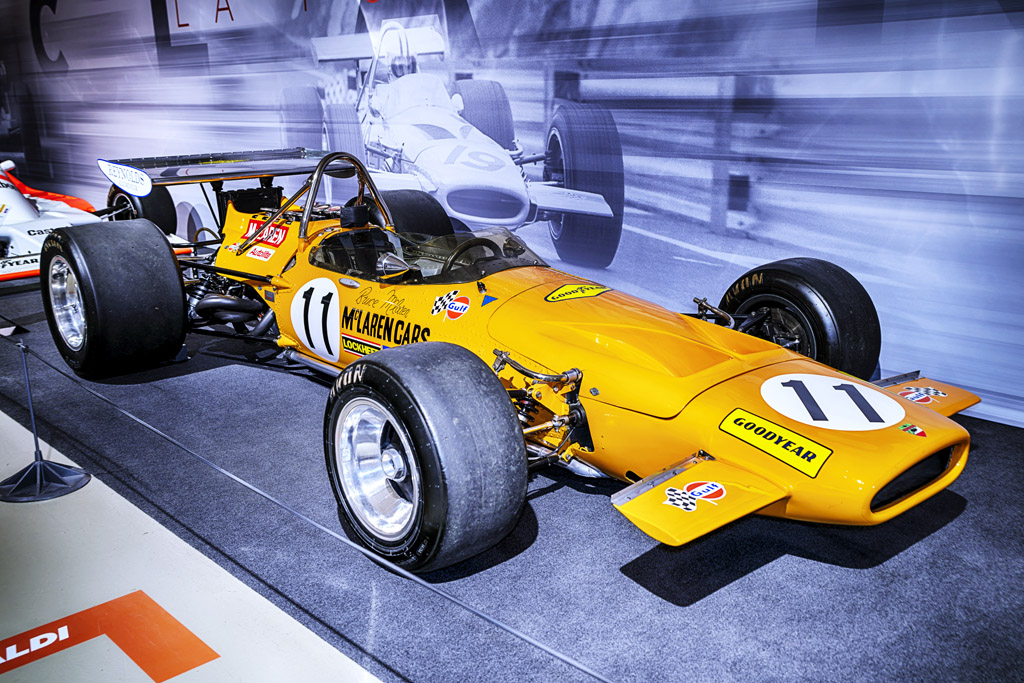
McLaren F1 M14A Cosworth #1 - 1970 - Bruce McLaren Motor Racing
The M14 is the single-seater raced by McLaren in the 1970 and 1971 Formula 1 championships. This chassis debuted in the 1970 season with Bruce behind the wheel, securing a promising 2nd place at the Spanish Grand Prix at Jarama. Tragically, Bruce McLaren passed away during the championship, forcing the team to reorganize its plans. Peter Gethin, a McLaren Formula 5000 driver at the time, was called up to join the Formula 1 team, marking his debut in the premier category. This model allowed Dan Gurney to achieve a 4th place in the championship. However, it proved not competitive enough against Lotus and Ferrari. The papaya orange livery first appeared on McLaren cars in 1968. Bruce McLaren, aiming to strengthen his team's visual identity, chose this color to stand out from the green livery used by British brands. Additionally, orange had another advantage: it stood out clearly on black and white television screens, ensuring greater visibility.
|
|
|
|
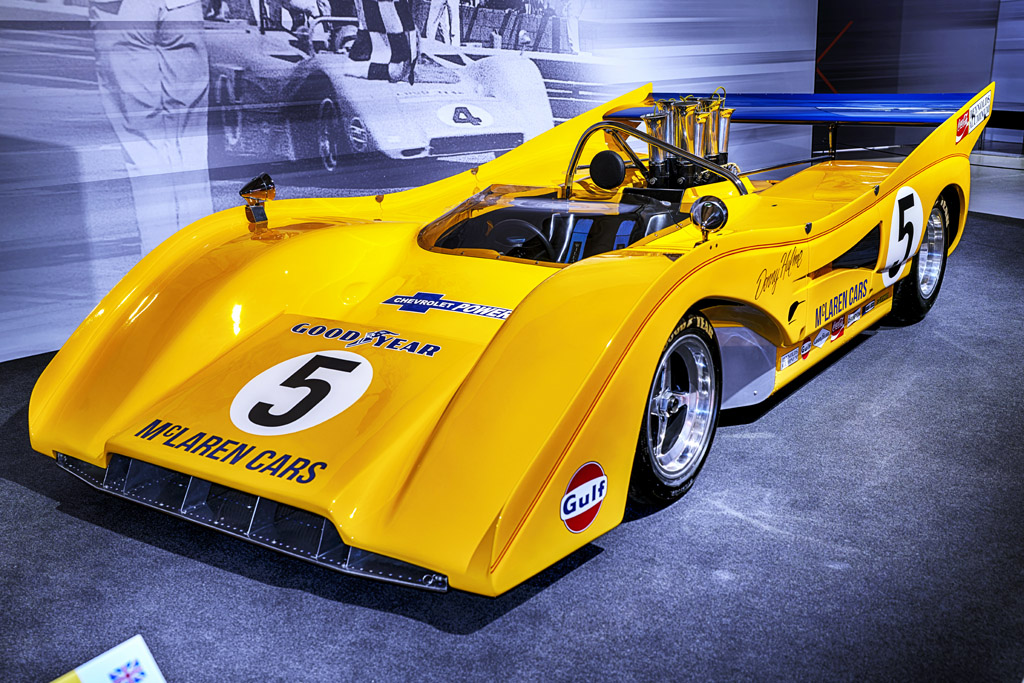
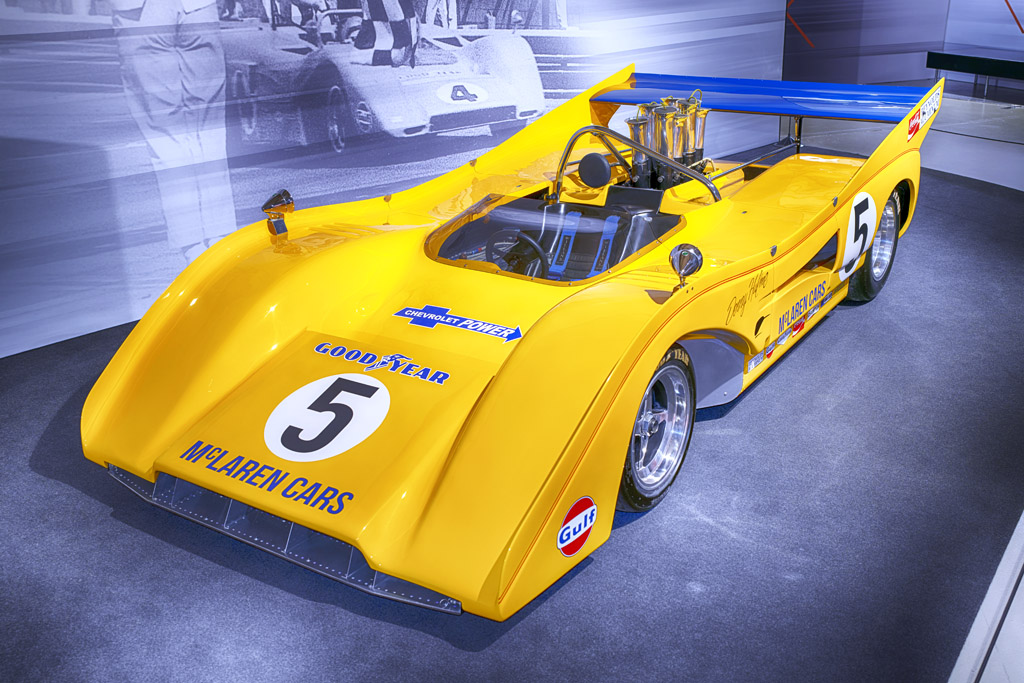
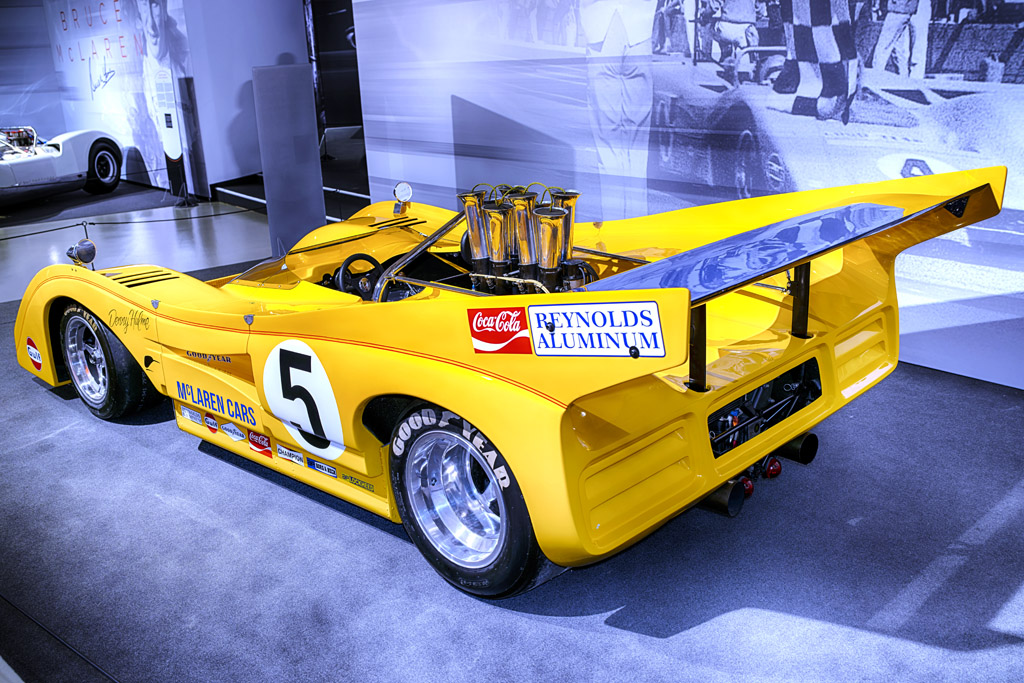
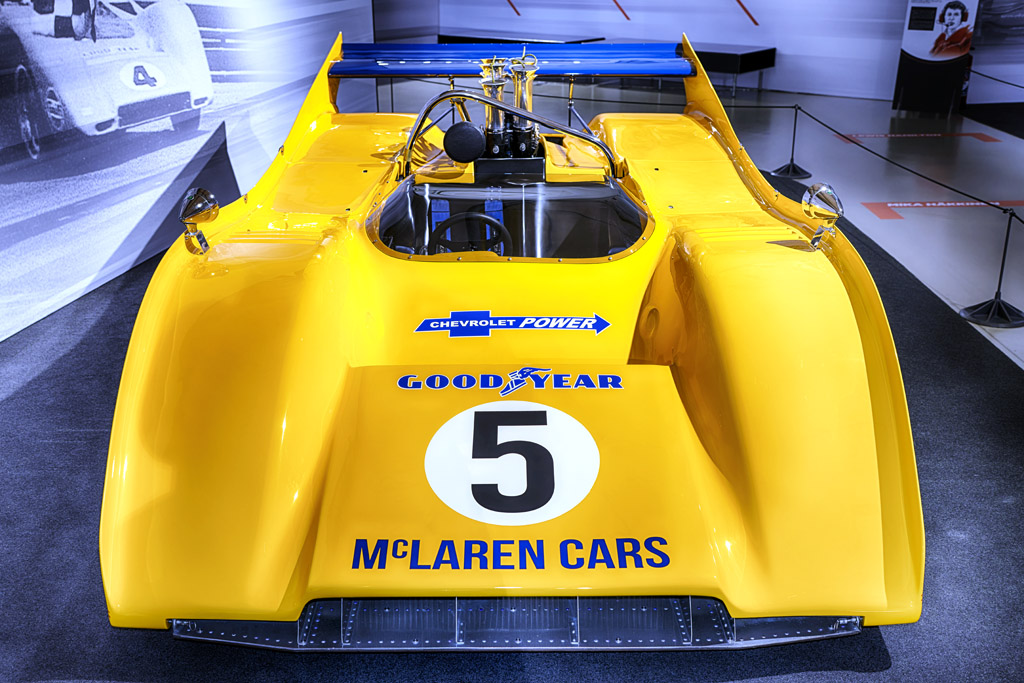
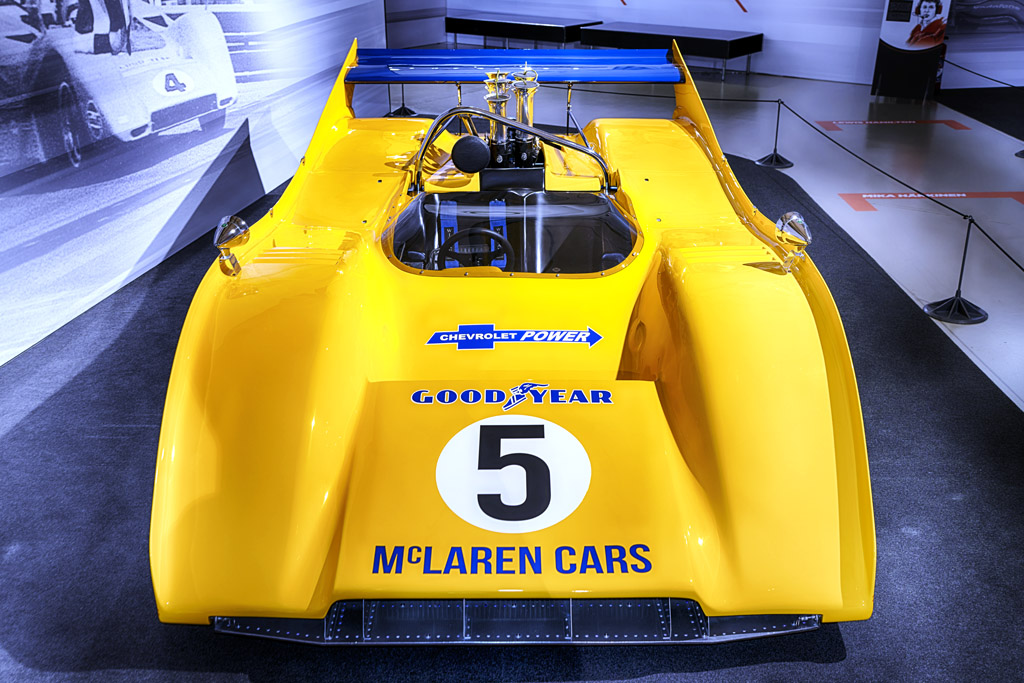
McLaren M8F Chevrolet Can-Am #01 - 1971 - McLaren Cars Ltd.
The M8F, entered in the 1971 Can-Am season, enabled Peter Revson and Denny Hulme to secure 1st and 2nd place in the championship. As the final model in the M8 series, it highlights the rapid evolution of aerodynamics. The rear wing, mounted between fins and first introduced on the M8D, is optimized: the fins now extend from the front to the rear, minimizing air dispersion. In just four years, the progress is remarkable: despite being 100 kg heavier than the M8A, the M8F is 4 seconds faster per lap at the Riverside circuit.
On the side of the car, beneath Denny Hulme's name, sits McLaren's logo of the era: a kiwi, the iconic bird of New Zealand, homeland of Bruce. On the steering wheel, the team's first logo also features a kiwi.
|
|
|
|
|
|
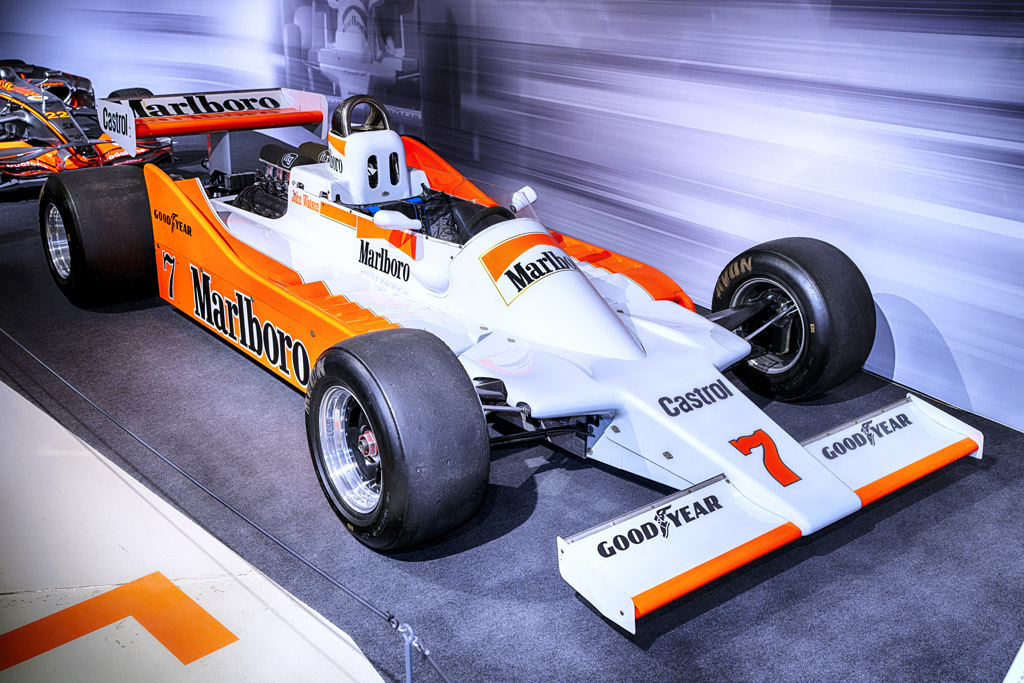
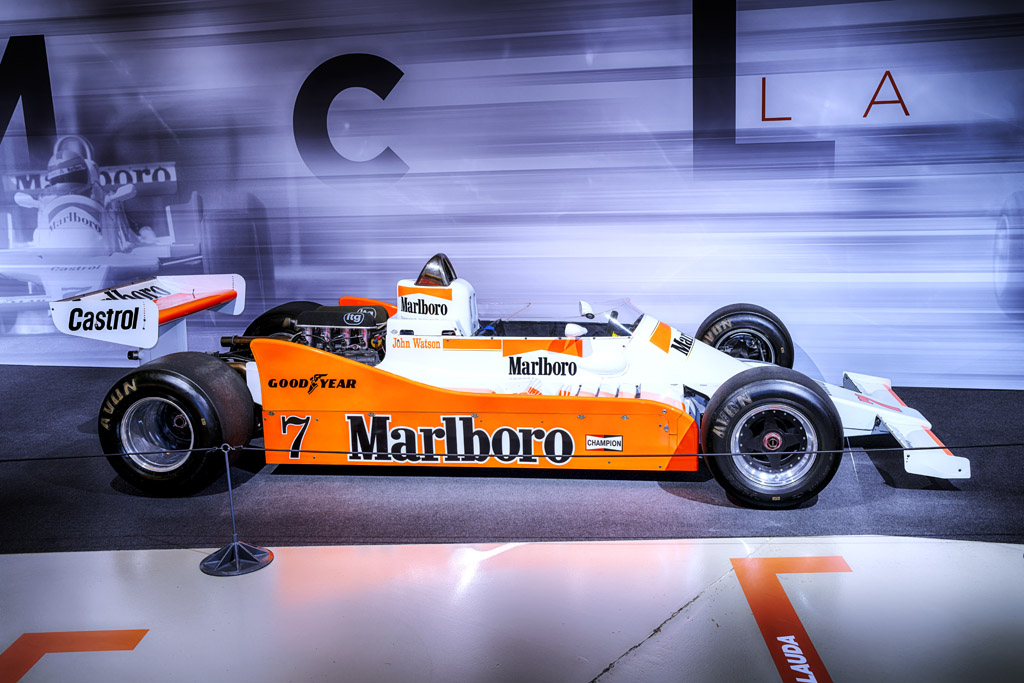
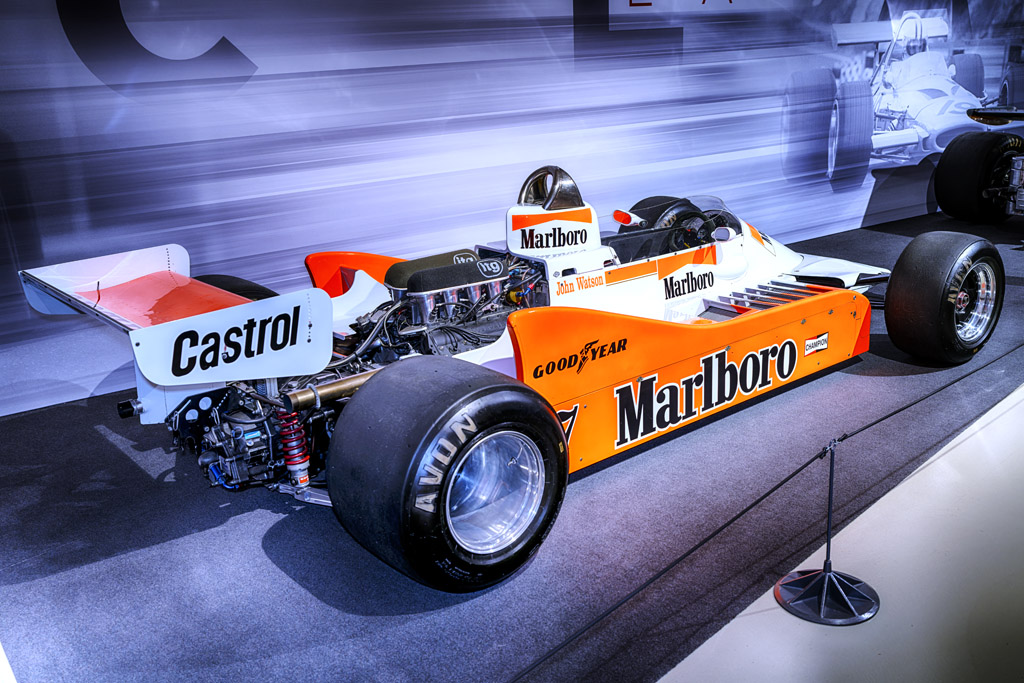
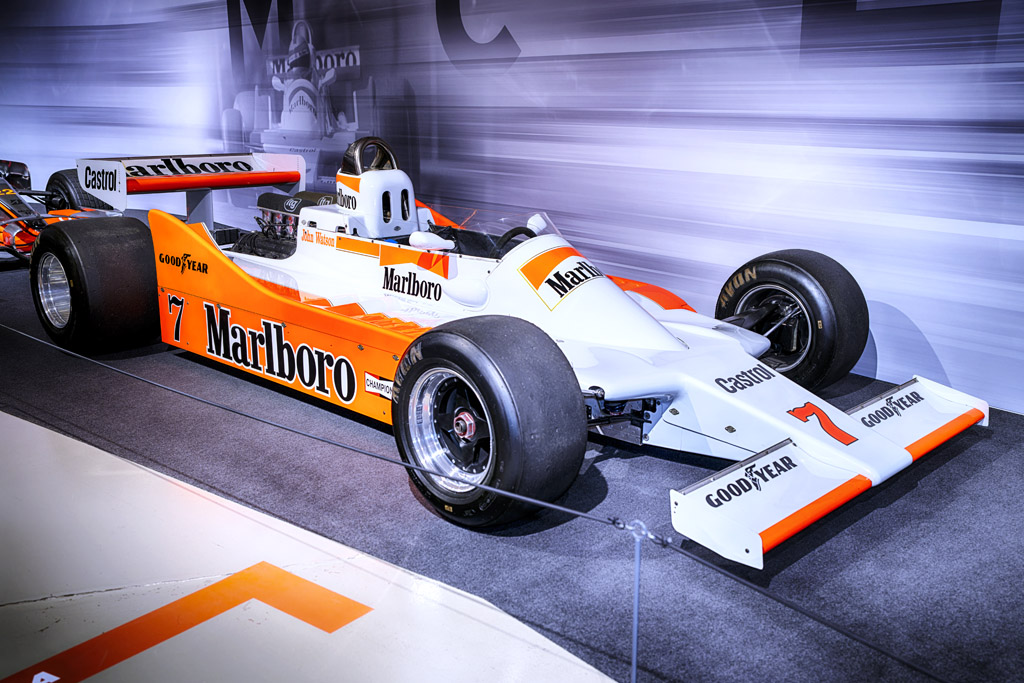
McLaren F1 M28 Cosworth - 1979 - Marlboro Team McLaren
The M28, a single-seater entered by McLaren for the 1979 season, is often considered one of the least successful models in the team's history. Larger than its competitors, it proved to be slower than the rest of the field, with the ground effect poorly controlled.
This M28 features a Marlboro livery, McLaren's main sponsor since 1974. Since the authorization of extra sporting sponsorship in 1968, companies in sectors like as oil, alcohol, and tobacco quickly invested in motorsport. The partnership between Marlboro and McLaren, which lasted 23 consecutive seasons, remains the longest in F1 history. This red and white livery became one of the most iconic in the sport.
|
|
|
|
|
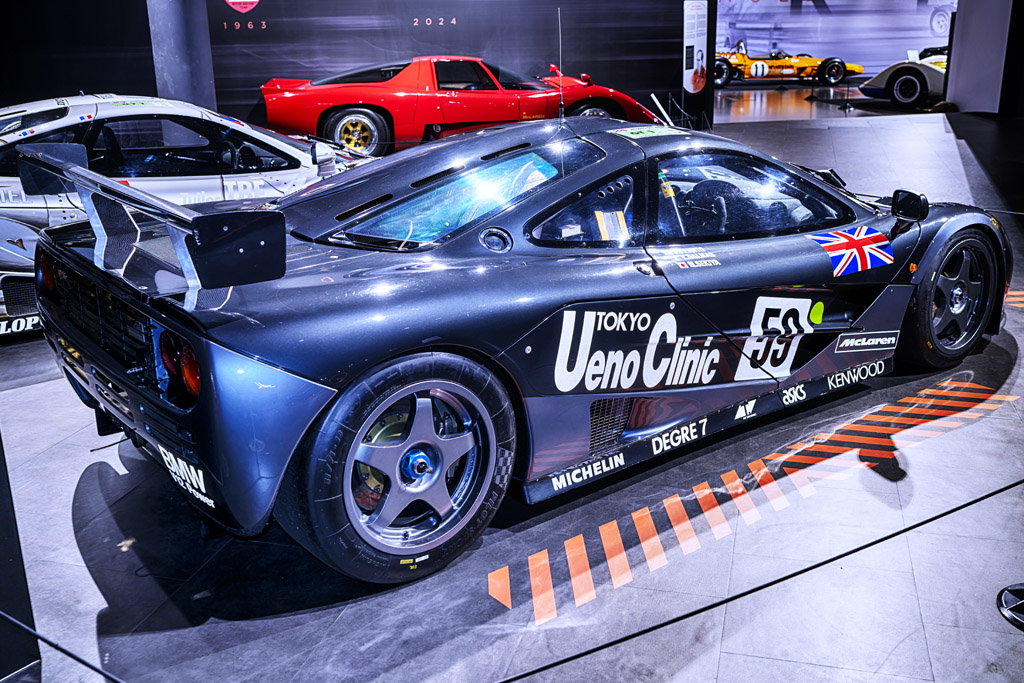
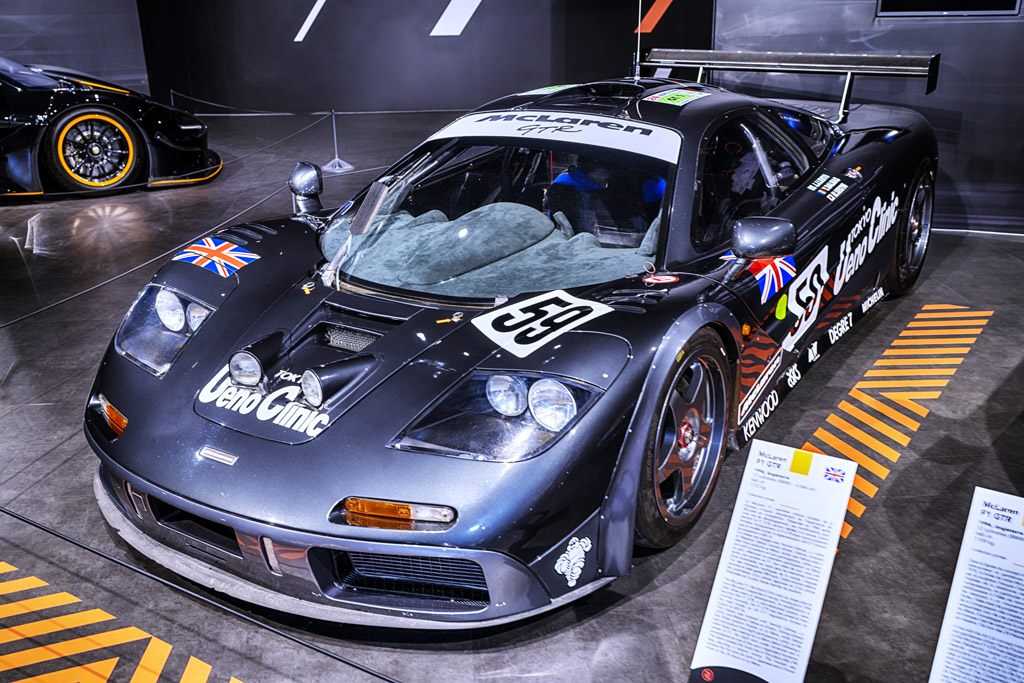
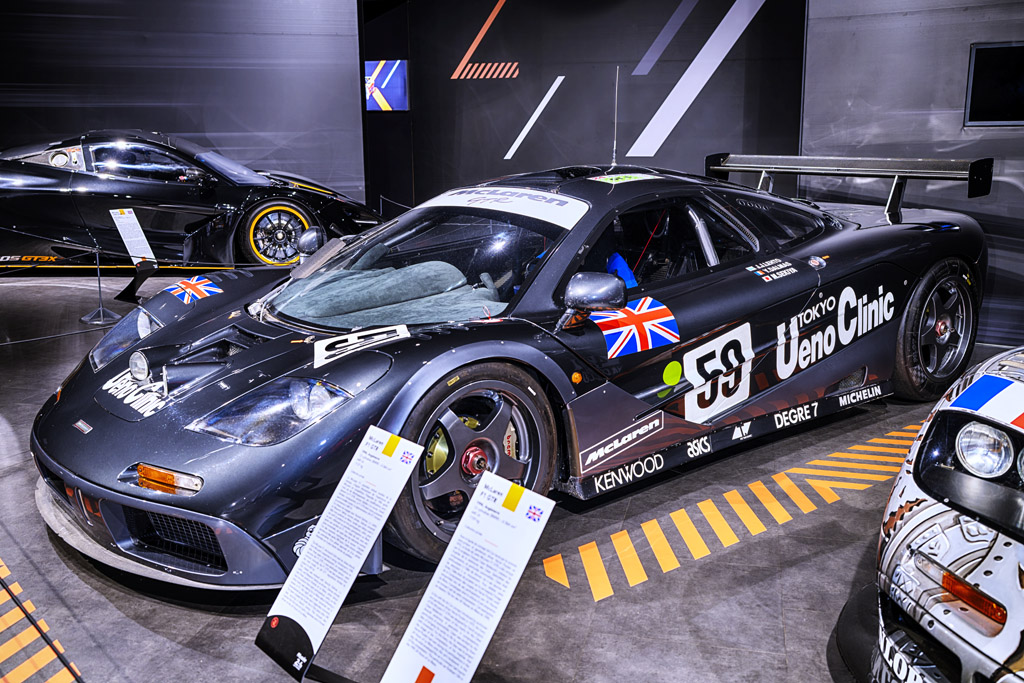
McLaren F1 GTR BMW #01R - 1997 - Kokusai Aihatsu Racing
The McLaren F1, the brand's first road car, draws directly from McLaren's expertise in racing. Introduced in 1994 after three years of development, its modifications to become the F1 GTR, a race-dedicated version, were minimal. Ironically, the F1 GTR was less powerful than the road model, as LM GT1 regulations limited its output to 600 hp.
This chassis was entered with Yannick Dalmas, J.J. Lehto, and Masanori Sekiya as drivers. Dalmas already had three podium finishes at Le Mans, while Sekiya had one podium from eight participations. Lehto, on the other hand, was making his Le Mans debut following career in F1. His night stint under torrential rain is remembered as one of the race's legendary moments. The team crossed the finish line in first place after 298 laps, securing a historic victory. This triumph also marked the first wins for both a Japanese driver and a Finnish driver at the 24 Hours of Le Mans.
|
|
|
|
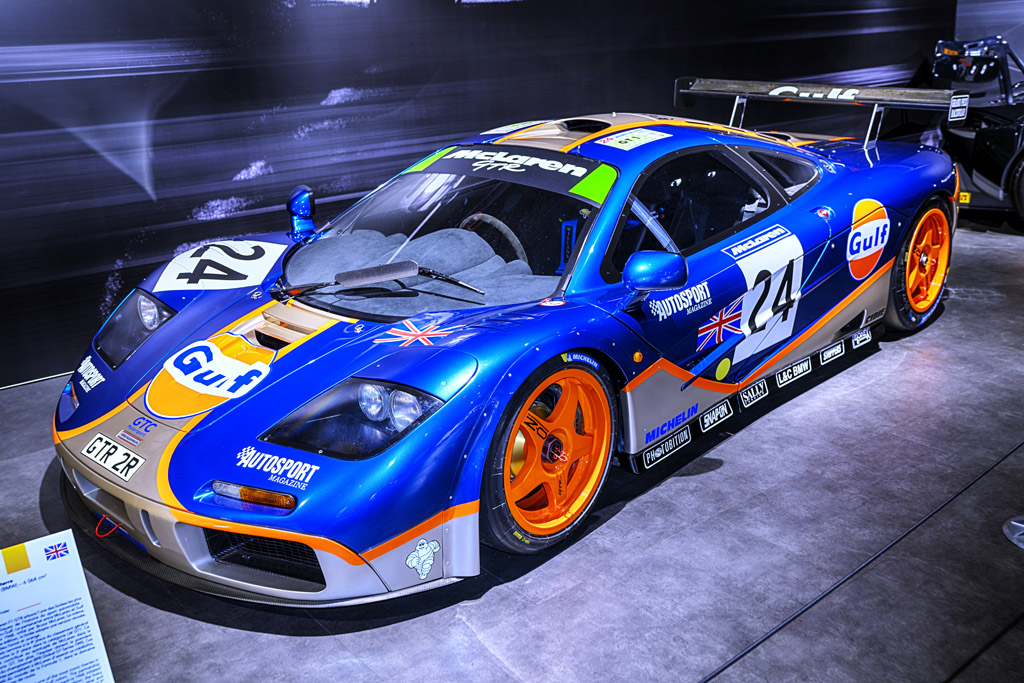
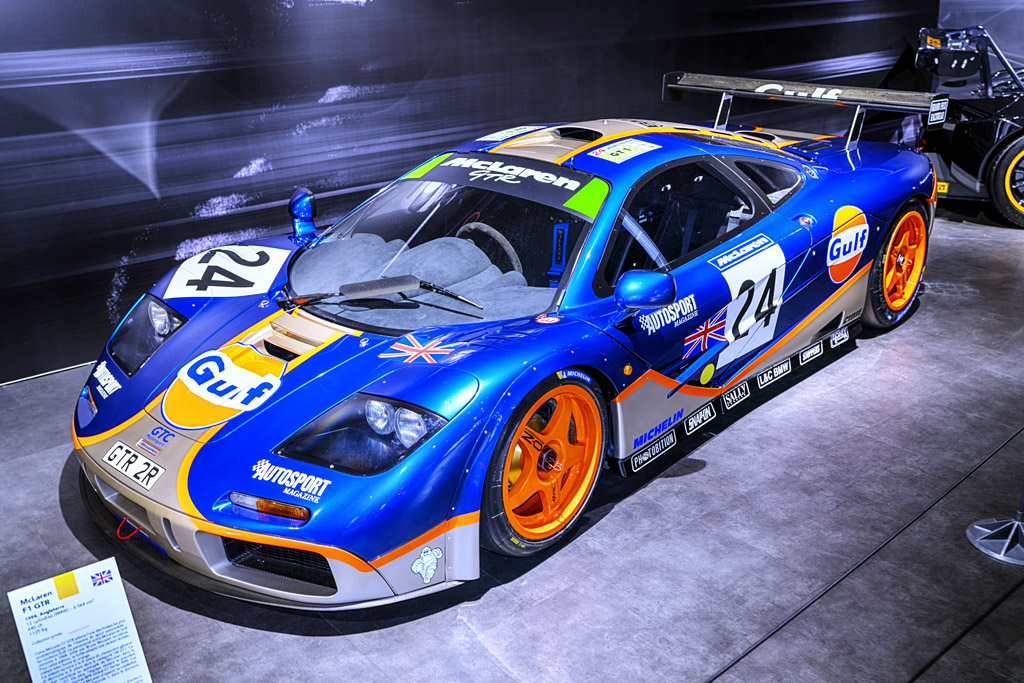
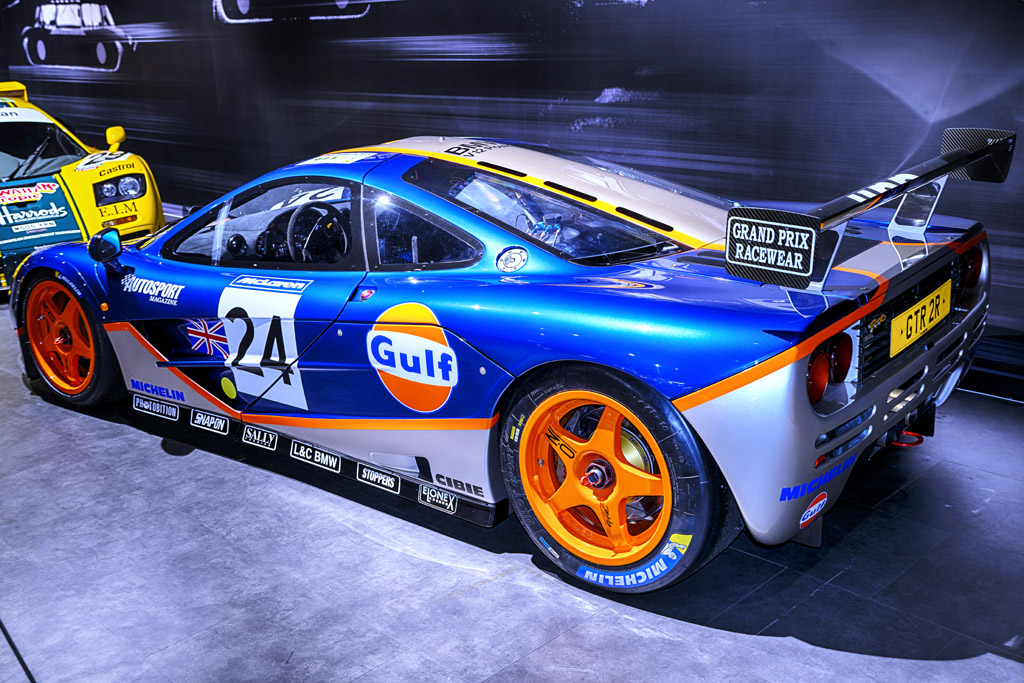
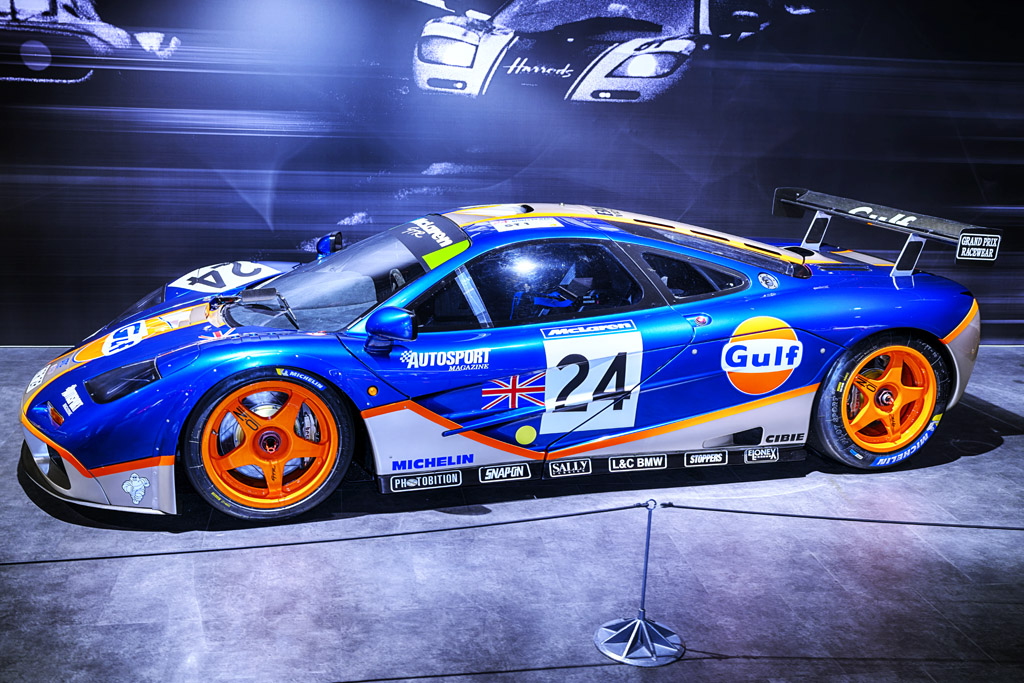
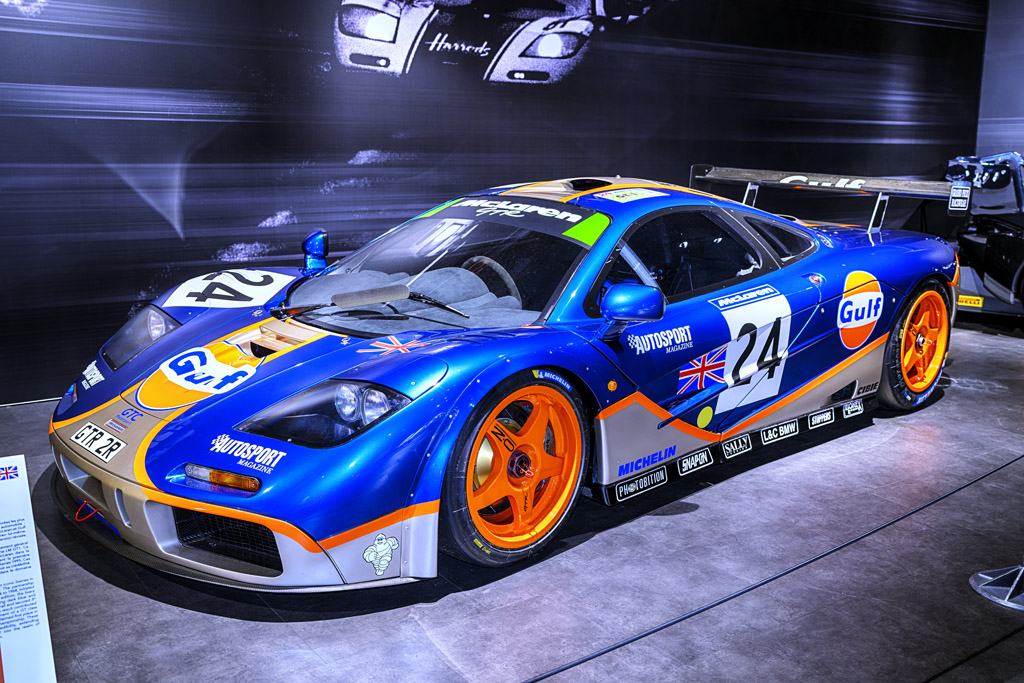
McLaren F1 GTR BMW #02R - 1995 - Gulf Racing
This F1 GTR features one of the most iconic liveries in motorsport history: the Gulf colors. The partnership between McLaren and Gulf dates back to 1968, initiated by Bruce McLaren himself. For this edition, the livery adopts a revised version combining dark blue and orange.
This chassis finished in 4th overall and secured 3rd place in the LM GT1 category. This result contributed to McLaren's quintuple in the GT class. Additionally, the team claimed first place in the 1995 BPR Global GT Series championship. These victories solidified McLaren's credibility extending beyond the world of Formula 1 into the realm of high-performance road car design.
|
|
|
|
|
|
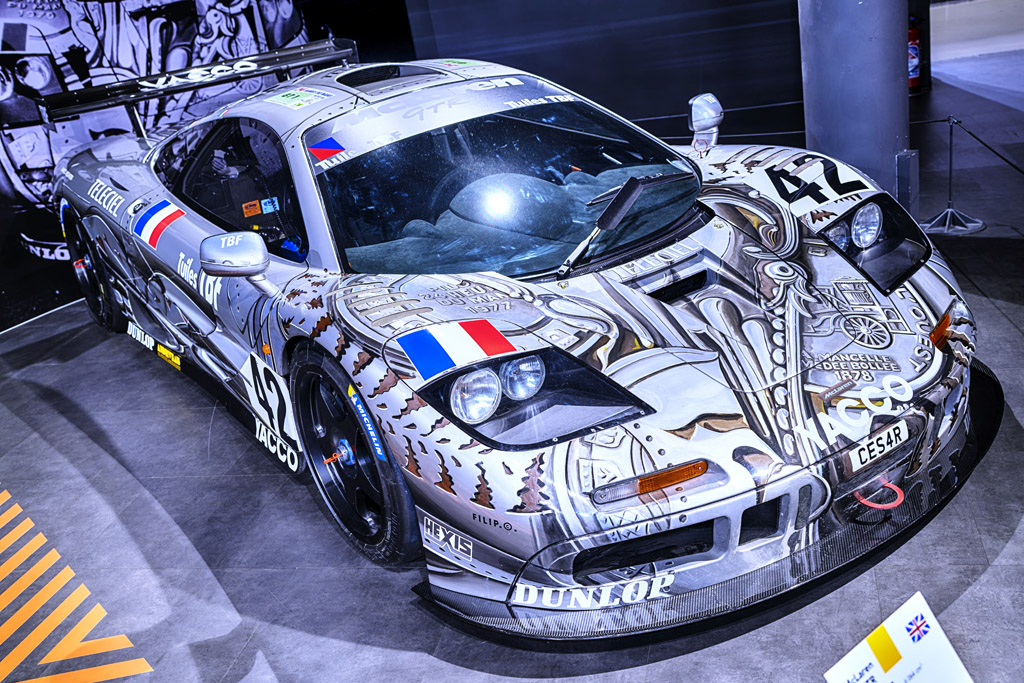
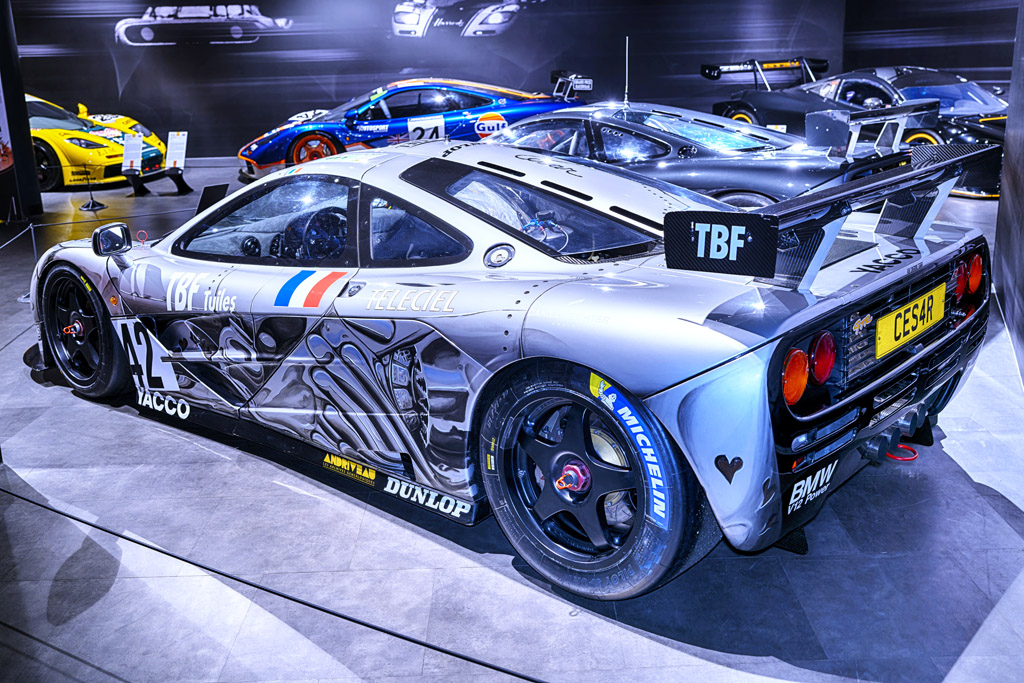
McLaren F1 GTR BMW #05R - 1995 - Société BBA Compétition
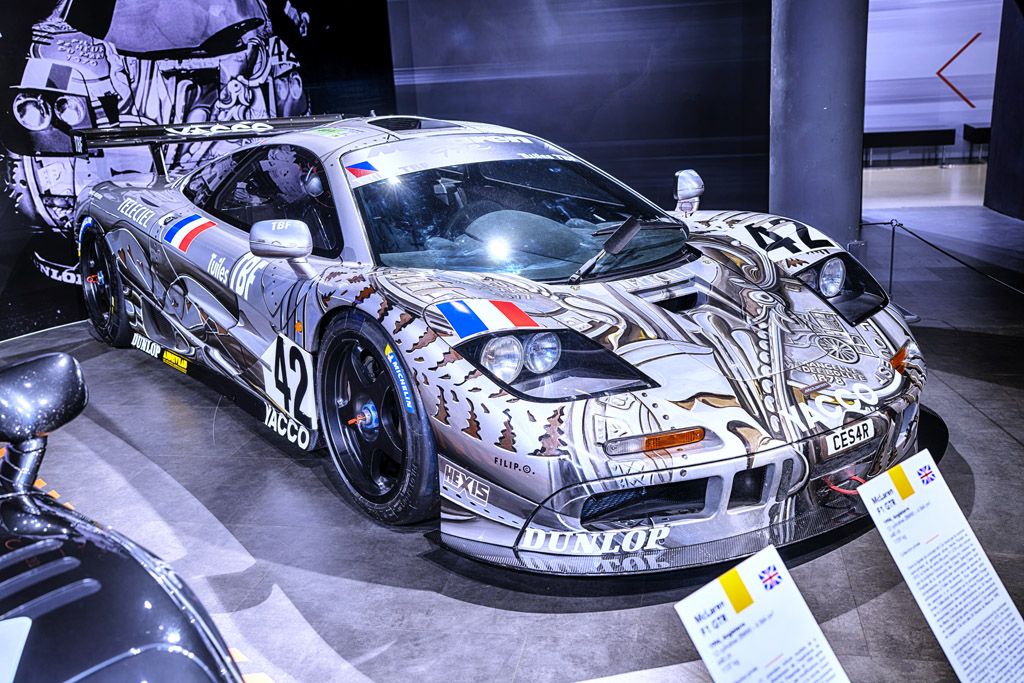
In line with the Art Car concept introduced by auctioneer and gentleman driver Hervé Poulain in 1975, the livery of this McLaren F1 GTR was designed by French sculptor César Baldaccini, creator of the trophy for the César Awards ceremony. A specialist in compression, particularly in automobiles, César was excited by the idea of bringing his works to life by associating them with movement. For this livery, the idea was to project the image of the compression of the trophies that Hervé Poulain had won during his participations in the 24 Hours of Le Mans onto the cars bodywork. In this way, the artist enveloped the car in a trompe-l'oeil imprint of this compression. This particular car finished 13th in the 1995 24 Hours of Le Mans.
|
|
|
|
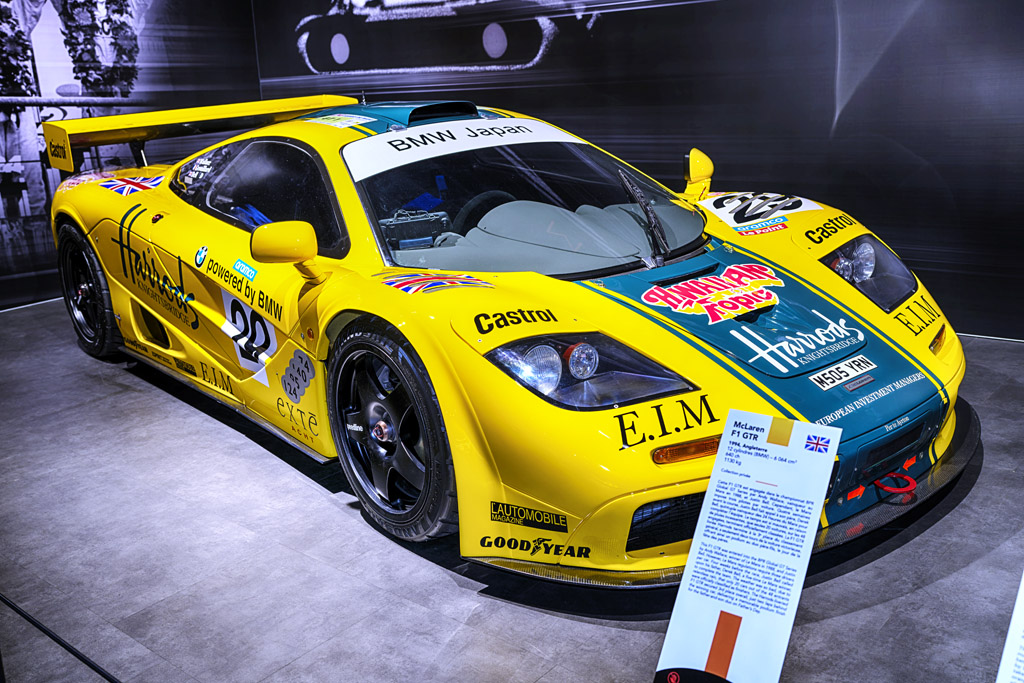
McLaren F1 GTR BMW #06R - 1995 - Harrods Mach One Racing
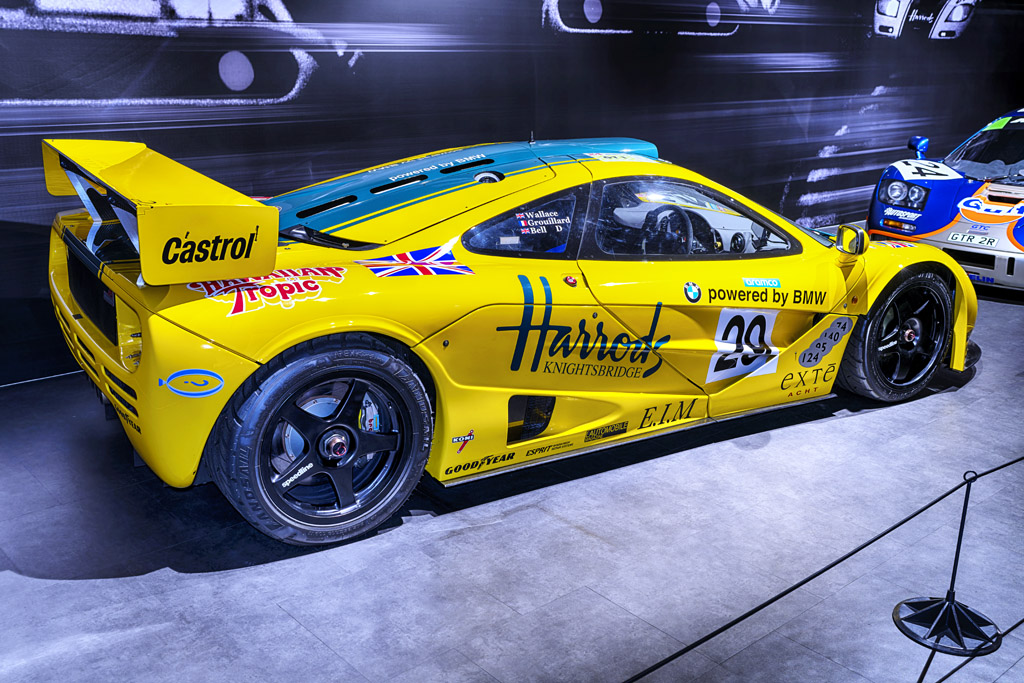
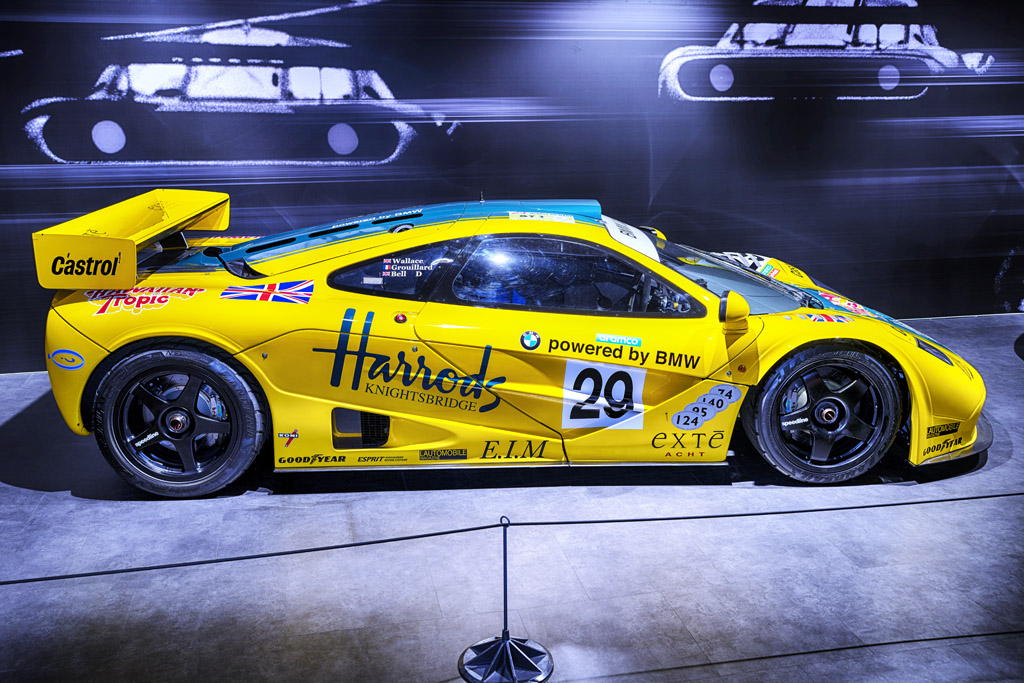
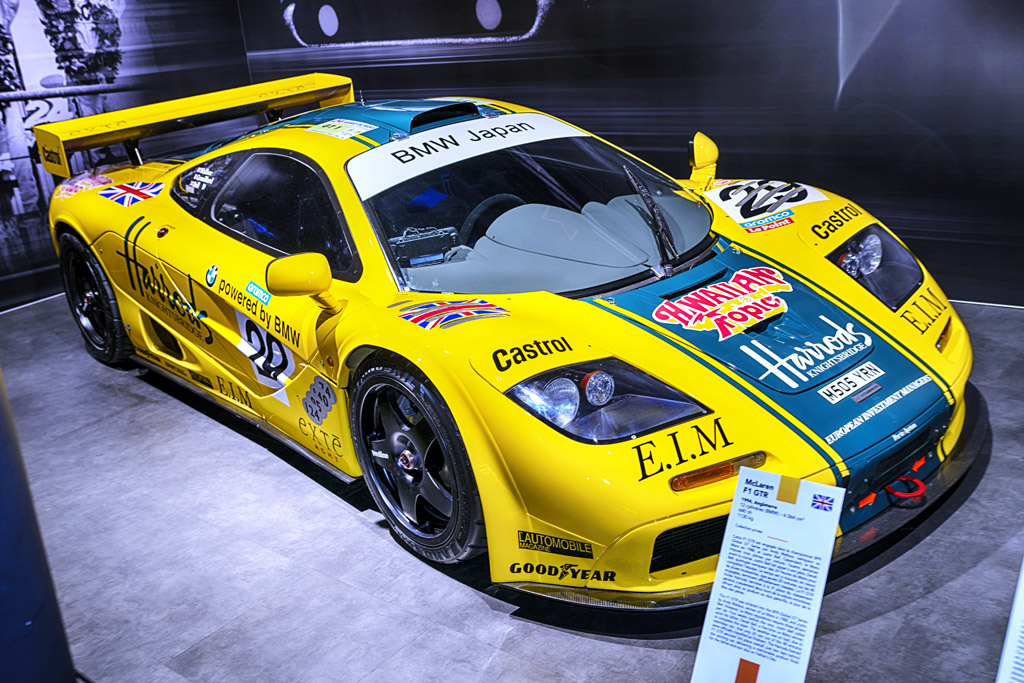
This F1 GTR was entered into the BPR Global GT Series by Andy Wallace, winner of Le Mans in 1988, and Justin Bell. However, Le Mans regulations require three drivers per car. Four weeks before the race, Justin Bell called upon his father, Derek Bell, a five-time Le Mans winner, to complete the team. The weather was so bad, due to relentless rain, that only 20 cars out of the 48 entrants were officially classified as finishers. The Harrods-liveried F1 GTR secured 3rd place overall, just two laps behind the winning car, delivering a memorable podium finish for the father-and-son duo on Father's Day.
|
|
|
|
|
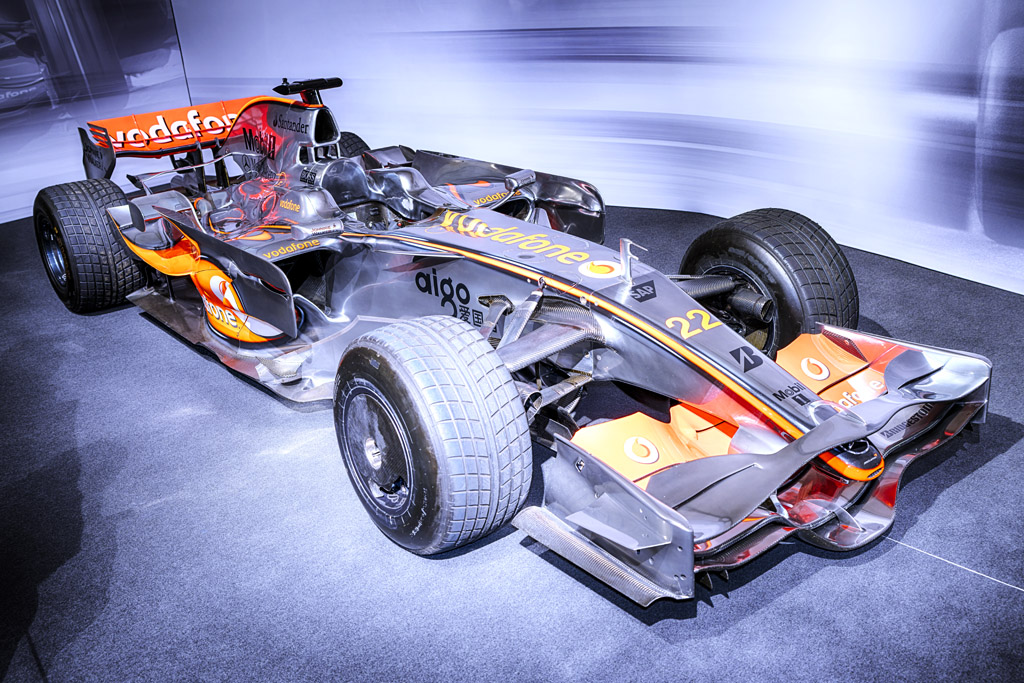
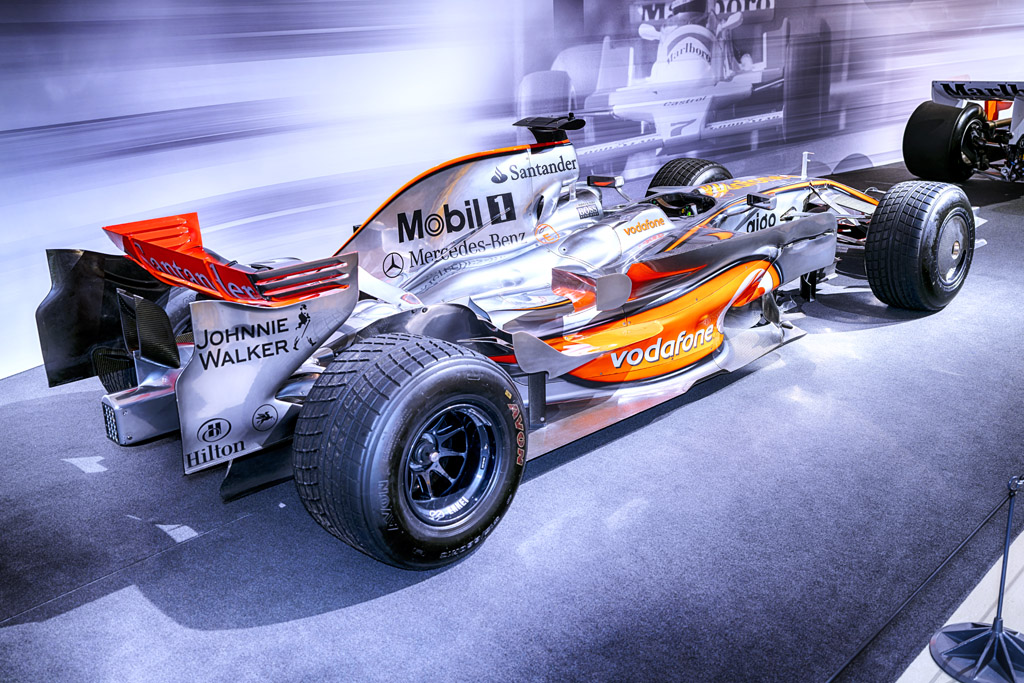
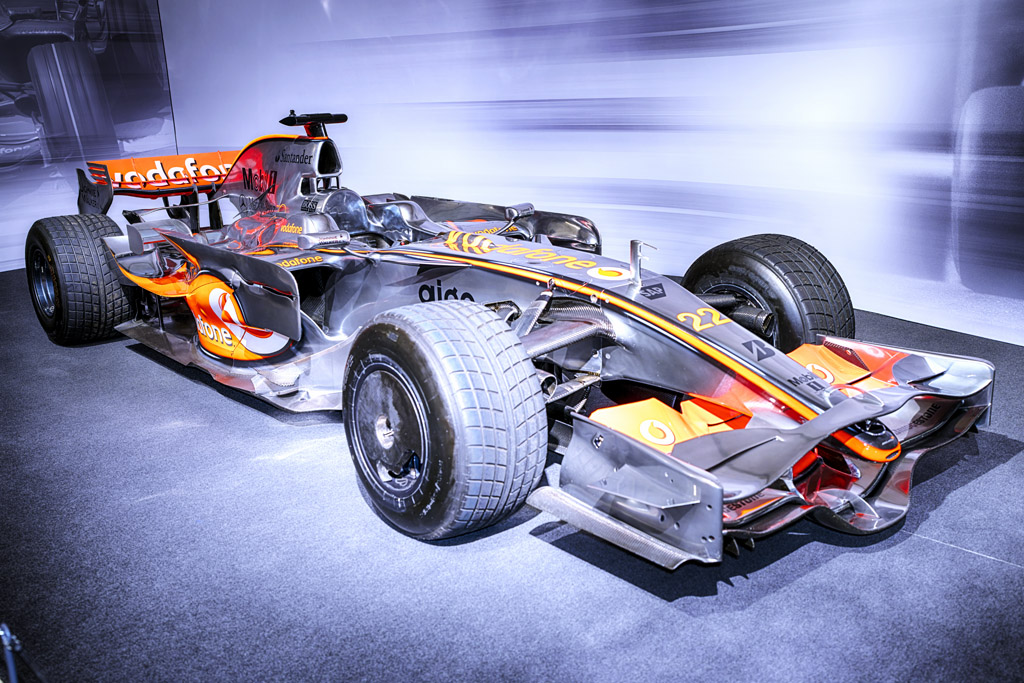
McLaren F1 MP4/23 Mercedes-Benz - 2008 - Vodafone McLaren Mercedes
The MP4/23 is one of the most iconic cars in the history of Formula 1. It was with this single-seater that Lewis Hamilton won his first world championship title in 2008, becoming, at the time, the youngest driver to achieve this distinction. This success marked McLaren's return to the top, ten years after its last drivers' title. The MP4/23 mobilized a team of 150 engineers, totaling nearly 14,000 hours of research and as much in manufacturing. The chassis, designed using composite technology that combines carbon fiber and honeycomb aluminium structure, reflects McLaren's innovation. This technological revolution was introduced to Formula 1 in the 1980s by John Barnard. As McLaren's technical director, he was the first to integrate carbon fiber chassis into the sport.
|
|
|
|
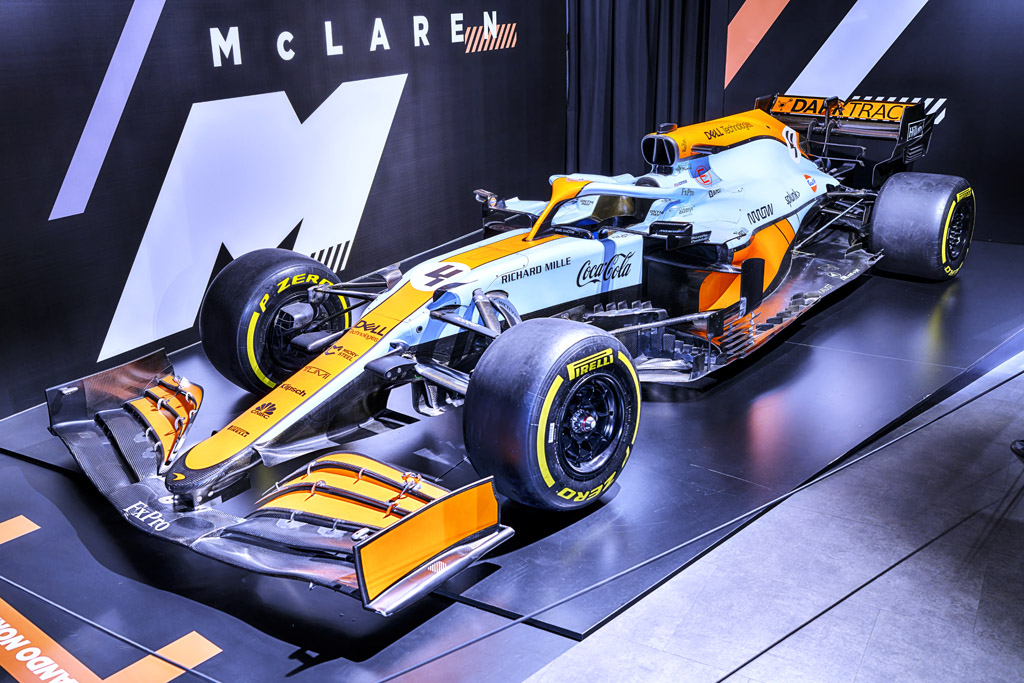
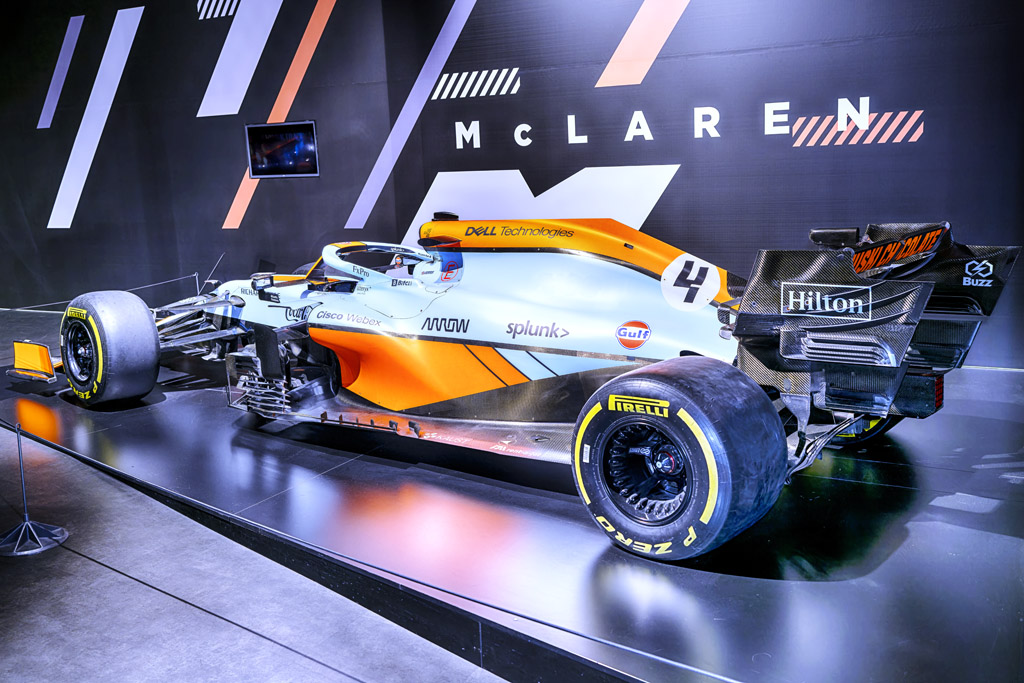
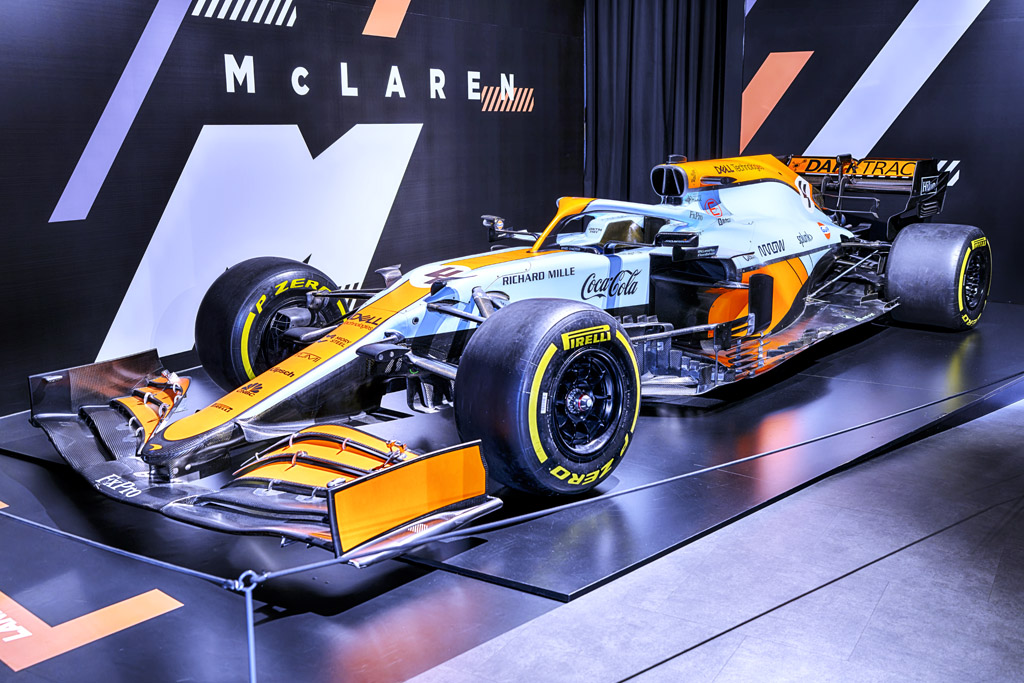
McLaren F1 MCL35M Mercedes - 2021 - McLaren F1 Team
This MCL35M competed in the 2021 Formula 1 Championship. An evolution of the MCL35, the addition of the M highlights the arrival of Mercedes as McLaren's new engine supplier. Mandatory since 2014, the MCL35M is equipped with the Halo: a three-pronged tubular titanium structure surrounding the cockpit, designed to provide a protective shield around the driver.
Used by Lando Norris in eight races, this chassis stood out with podium finishes in Imola, Monaco and Monza. At the latter, McLaren achieve a memorable one-two finish, its first since 2010.
Displayed here in a Gulf livery, specially designed for the Monaco Grand Prix, the MCL35M embodies a pivotal period for McLaren. Between 2019 and 2023, the team regularly finished just off the podium before finally clinching its 9th Constructors' Championship in 2024.
|
|
|
|
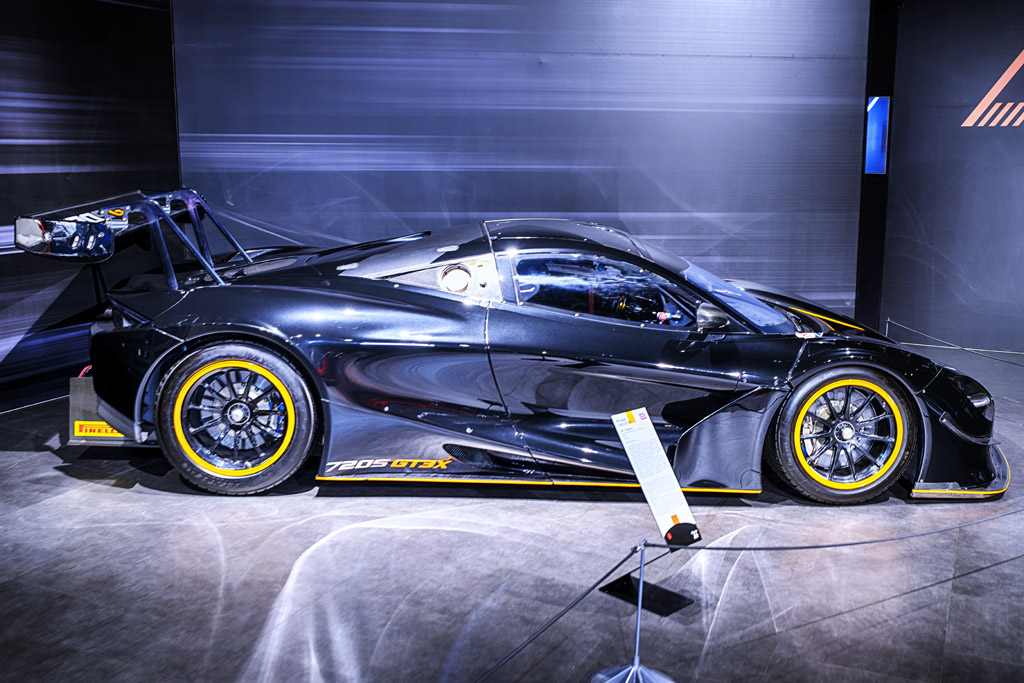
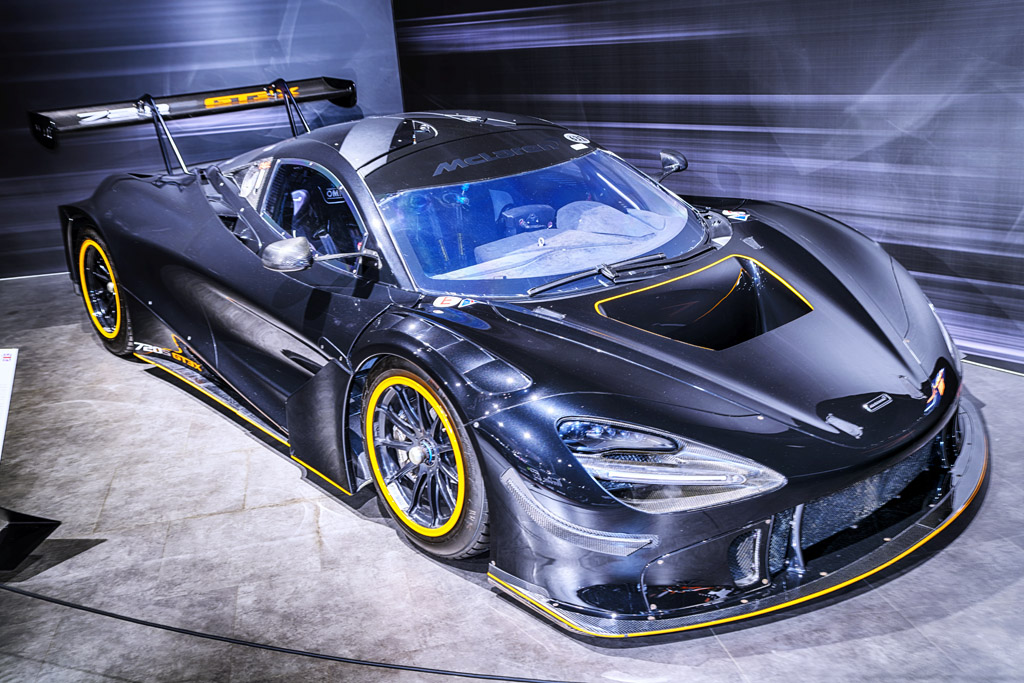
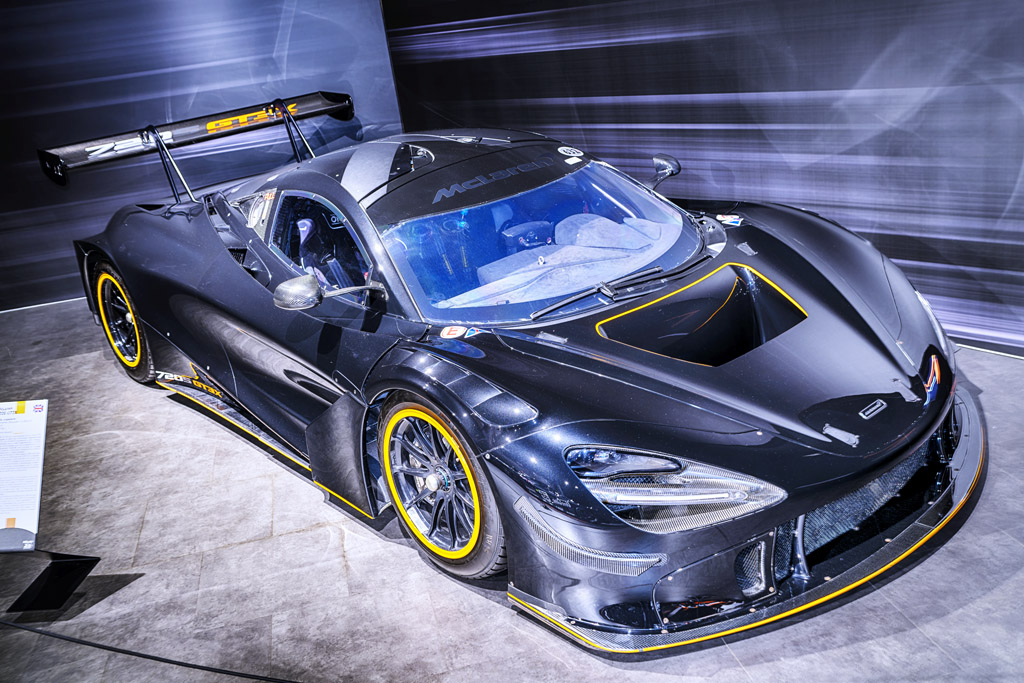
McLaren 720 S GT3X - 2024
The 720 S GT3X is an evolution of the 720 S GT3, developed beyond the FIA's regulatory constraints, which limit power to 600 horsepower. No longer adhering to these satndards, the GT3X is not homologated for GT competitions and is exclusively intended for private track days. To this end, the race-required fire extinguisher has been replaced with a passenger seat.
|
|
|
|
|


